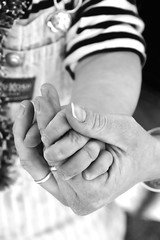
Christ has no body now but yours
No hands, no feet on earth but yours
Yours are the eyes through which He looks
compassion on this world
Christ has no body now on earth but yours.
No hands, no feet on earth but yours
Yours are the eyes through which He looks
compassion on this world
Christ has no body now on earth but yours.
attributed to Saint Teresa of Avila (1515-1582)
(unsourced and possibly apocryphal)
(unsourced and possibly apocryphal)
I recently accompanied my mother to a church service at King's College. Durelle is a Christian and wanted to go to church on Sunday anyway. I am interested in the King's College Chapel as a beautiful sacred space, and in the wonderful choral music that accompanies services there. It happened to be Whit-Sunday (or Pentecost) , an important Christian festival, and as such a guest speaker gave the lesson. Professor John Harper focused on creativity as a manifestation of the descent of the Holy Spirit. I did not find this particularly convincing, but I was quite taken by the quote that he gave from St. Teresa. I immediately saw that replacing "Christ" with "the Tathāgata" would make for an interesting exercise:
The Tathāgata has no body now but yoursThis resonates for me. Although the Buddha's have vowed to save us (from ourselves) it seems to me that we cannot afford to be complacent. In order to keep the Dharma alive we must be the hands and feet of the Buddha. Some time ago I wrote a post on the idea of Grace in Buddhism - based on a translation of the Japanese kaji (Sanskrit: adhiṣṭhāna) as "grace". This rather beautiful teaching says that spiritual practice is a two way process: the Buddhas and Bodhisattvas do what they can for us, and our part is to be receptive to what they are offering.
No hands, no feet on earth but yours
Yours are the eyes through which He looks
compassion on this world
The Tathāgata has no body now on earth but yours.
Sangharakshita has said that an image for the spiritual community is the 1000 armed Avalokiteśvara - each of us being a hand of the Bodhisattva of Compassion, reaching out to help, provided with an eye in order to see where help is most needed. Avalokiteśvara's 1000 arms reach out to embrace all beings.
The call to action can be quite daunting. After all how can we mere mortals take up the burden of a Buddha? My approach to is to try to make a clear distinction between the ideal and what I'm capable of in practice. The ideal is universal loving kindness. The practice may be not acting out an angry impulse, or conversely doing something gratuitously generous. Such things may not "save" anyone, but they contribute to a better world. If everyone was making this kind effort then it really would be a better world. And in the long run generosity, kindness, selflessness etc are liberating.
In terms of our local Buddhist community I think this means helping others as best we can. Not everyone is skilled enough, or temperamentally suited to teaching, but those who are need to be supported. Reaching out to people who want the Dharma is demanding, and doing it without a supportive Sangha behind you is much more so - as those pioneers taking the Dharma to new towns or countries will know. Often just an enthusiastic presence at a centre can make a difference. It did for me when I first went looking for meditation instruction. Members of our community will need assistance from time to time, in all sorts of ways, and it is up to us to help them.
Compassion also means forgiving people. Forgiving them for letting us down, or even for harming us. And justice which involves harming or humiliating the other is no justice at all - the Karaṇiya Mettā Sutta makes this clear. We need to be rational about this also. If someone has harmed us, then it may not be sensible to be around them unless they have undergone a big change and sincerely renounced harm. It may be best to avoid someone who is violent. However it is important to try to see the suffering that the violent person is creating, and reflect on the consequences for them. If we wish harm or suffering on them then we too will reap the same fruit.
The quote above may be apocryphal, but this does not reduce it's applicability. As Buddhists we aim to follow the Buddha; we aim to be like him; to emulate his fine qualities and graceful bearing; we aim to in the long run become a Buddha ourselves.
image: St Teresa of Avila