06 June 2014

Spiritual I: The Life's Breath

I've been arguing against using the word spiritual in relation to Buddhism for a while now. My contention is that the word has all the wrong connotations for Buddhism, we don't believe that humans have spirits, do we? One of the frequent counter-arguments is that spiritual simply doesn't mean what I say it does. In what I consider one of the most important essays I've written (Metaphors and Materialism) I identify the word spiritual with a tradition of ontological dualism and now I would link it another in the form of Vitalism. So is this fair?

Ancient Indian Buddhists had a practice of adding prestigious adjectives to names. It's still goes on today. VIPs, especially religious VIPs affix śrī to their names, sometimes more than once, e.g. Sri Sathya Sai Baba, Sri Sri Ravi Shankar, and Sri Sri Sri Nirmalanandanatha Swamiji.

In early Buddhist texts one common prestige word, curiously, was brahman: brahmavihāra, brahmacarin, etc. It's curious because it's a word which can only have come from the Vedic context and derives it's meaning from Brahmanism. It refers to the cosmic essence with which the theologically minded Brahmin hopes to merge at death (a new idea introduced by the Bṛhadāraṇyaka Upaniṣad). Alongside brahman was ārya 'noble'. Before long Buddhist started to prefer ārya. Avalokiteśavara becomes Āryāvalokiteśvara; Tāra becomes Āryatāra. The Prajñāpāmitāhṛdaya becomes then Āryaprajñāpāramitāhṛdaya. And so on. And we know that mature tantra substituted vajra: vajraguru, Vajrasattva, vajra-everything. Nowadays the adjective is spiritual: spiritual tradition, spiritual community, spiritual practices, spiritual teachers, spiritual experiences, and spiritual awakenings.

The key adjective in all cases is used to mark out a conceptual space. It is not merely linguistic, does not merely rely on denotation, but also defines social and political roles and relationships. A spiritual teacher is a very particular type of teacher for example, with a very particular relationship to a student and a particular kind of role in an organisation.

In this and two subsequent essays I will try to excavate around this word spiritual to see how it became the religious prestige word of the moment. My argument is that just as the Dalai Lama has adopted the ecclesiastical title of a Pope, i.e. His Holiness, the word spiritual is one we Buddhists have adopted from Christianity and because of this it comes with all the connotations and entailments of the Christian world view. However the word spiritual had already begun to be used independently of the church when Buddhism started to become popular, particularly in spiritualist circles: the space defined by spiritual was already contested allowing us to stake a claim in it.

Part I, this essay, will begin with the etymology of the word, showing how the word draws on various words for 'breath' as a metonym for 'life' and is intimately tied up with Judeo-Christian ideas on the animation of inanimate matter (which I've already shown to be an anachronistic view). I'll show that 'life's breath' is very common way of understanding life in the pre-modern world, but is ultimately based on misunderstandings about how the world works and in particular how the human body works.

Part II will look at the word in terms of frames as described by George Lakoff and try to analyse the web of images and ideas invoked by the word. Part II will critique the applicability of these frames to the Buddhist project.

Having looked at how the word is used Part III will shift the focus onto who uses the word. Influenced by Michel Foucault Part III will look at the power relations implicit in the domain marked out by spiritual, or what we might call the politics of spirituality.


Etymology


Our usage of the word "spiritual" is tied up with translations of the Christian Bible, especially Genesis and the story of the creation of Man:
And the LORD God formed man of the dust of the ground, and breathed into his nostrils the breath of life; and man became a living soul. Genesis 2:7, King James Bible (Bible Hub)
Here, breathed and breath of life are distant translations of Hebrew words: way·yip·paḥ and niš·maṯ ḥay·yîm respectively. (Note that "God" here as elsewhere is ’ĕlōhîm which is the plural of El 'God'). (Bible Hub) In Biblical Greek "breath of life" was translated pnoín zoís from pneuma 'breath' and zōēs 'life'. Biblical Latin at first translated the pneuma part with words derived from anima, which also derived from a root meaning 'to blow, to breath' and is also equivalent to Greek psykhē (meaning something like animating essence) which itself comes from a from PIE root *bhes- 'to blow, to breathe'In Augustan times translators settled on the Latin spiraculum vitae from spīritus 'to breathe' and vita 'life' (from vivare 'to live' and cognate with Sanskrit jīva). After being animated Adam is described as animam viventem 'a living soul'.

The word spīritus has a range of meanings:
'a breathing (respiration, and of the wind), breath; breath of a god,' hence 'inspiration; breath of life,' hence 'life'; also 'disposition, character; high spirit, vigor, courage; pride, arrogance.'
Of course we also find spīritus sanctus 'the Holy Spirit' playing an important role in Christianity. Spīritus derives from a Latin verb spirare 'breathe'. It can be further related back to a Proto-Indo-European verbal root: *(s)peis- "to blow, to fizz". If we start from the root and work forwards we find it at the base of a relatively restricted range of English words. The Indo-European Lexicon lists 'fart, fizz, fizzle' all via Germanic and 'spirit' via Latin.

Words derived from the Latin spīritus begin to appear in English in about the 13-14th century and may either have come more or less directly from ecclesiastical Latin or via Norman French. This period coincides with mature Middle-English as the language of most of England, representing the final merging of Norman French vocabulary into Old English (Anglo-Saxon) to produce a single language. It left English with a rich vocabulary for many domains, for example (see also table below):
breath (Old English bræð), quick
inspire, expire etc. (French)
spirit; anima (Latin)
pneumatic, pneumonia; psyche (Greek)
The noun spirit first meant 'animating or vital principle in man and animals' and derives from a French usage meaning 'soul'. Compare the modern French esprit. Online Etymology Dictionary. Thus we see that from the beginning spirit in English is a metonym for spiraculum vitae 'the breath of life', that which makes us animam viventem 'a living soul'. Our word spiritual is an adjective deriving from spīritus and primarily meaning 'of or concerning the spirit'. Spiritual is also used in the sense of 'pertaining to the church'.

There are several subsidiary senses of 'spirit' that help to shed light on what the word meant in Medieval times. From about 1400 spirit began to mean ghost - the disembodied spirit of a dead person; often in the sense of a spirit that has not (yet) ended up in either heaven or hell. The word ghost comes from PIE *gheis- "to be excited, amazed, frightened" (c.f. German geist). From about 1500 the word was used to suggest "a nature, character". This line of connotation developed so that spirit as 'essential character' appears by the 1680's and becomes common in the 1800s. Thus I can write in the spirit of Enlightenment scholarship or comment on the zeitgeist (the spirit of the times). The sense of 'divine, related to god' is attested in the 14th century. When we say someone is "spirited" we mean they are lively, energetic, courageous. This sense is attested from 1590, though Milton uses it to mean "possessed by a spirit." OEtD

This takes us close to the crux. For pre-modern people the difference between living and dead matter was breath. I think we've come such a long way that it's difficult to get our heads around this nowadays. What God did in creating Adam was gather up some dead matter, some dust, and "breathe life into it"; he animated it - indeed he inspired Adam. The metaphor is BREATH IS LIFE. Breathing is the activity par excellence of living beings. This metaphor is quite widespread in the ancient world.


The Life's Breath


In pre-scientific times to live was to breath; and die was to stop breathing. However, the ancients came to a very different understanding than we have today. We now know that when the diaphragm muscles contract it draws air into the lungs where oxygen molecules cross the membranes to enter the bloodstream and be captured by haemoglobin molecules for transportation around the body. At the same time carbon-dioxide crosses the membrane in the other direction so that our our breath contains less oxygen and more carbon-dioxide than our in breath. In the mitochondria of our cells oxygen takes part in creating an energy transfer molecule, adenosine-triphosphate (ATP) and is converted to CO2 in the process.

In ancient India by contrast the arrow of causation between the bodily movements of breathing and the air entering the body was reversed. For them the movements of the air element (vāyudhātu) caused all bodily movements, particularly the movements associated with breathing and not the other way around. Vāyu takes in the movements created by the wind (leaves rustling in trees), the movement of the bodies limbs, and the movements associated with breathing. Vāyu in the body is called āna 'breath' and comes in various forms indicated by the prefixes: apa, ud, pra, vi, and sam. We have:
  • apāna 'down-breath' (aka fart; Monier-Williams resorts to Latin at this point: ventris crepitus); 
  • udāna 'up-breath' the breath involved in speech; 
  • prāṇa 'fore-breath', but used in the sense 'breath of life'; 
  • vyāna 'diffused-breath' (spread throughout the body); 
  • samāna 'complete-breath' (?) circulates around the naval and essential for digestion (though digestion itself is a kind of fire, the food must move through the body); 
The Buddhist practice of āna-apāna-sati (Skt ānāpānasmṛti) involves watching the in and out breaths (though note the connotation of apāna in Sanskrit!).

In China we find a similar idea in 氣 (Japanese pronunciation ki) The Chinese etymology is blowing 气 qì (may have been a man blowing) on rice 米 . (Another more in-depth interpretation via Language and Meaning). The character has a wide range of meanings: "air, gas, the atmosphere, weather; breath, spirit, morale; bearing, manner; smells, odours; to be angry, anger;  provoke, annoy." In our context means 'vital energy'. It is this energy which gives the martial artists their control and power and which the acupuncturist believes they are manipulating. 

It's possible that the Sanskrit reflexive pronoun ātman 'myself; the body; soul') may derive from either √an 'breath' or √at 'move' though this is unclear. The Proto-Indo European Lexicon puts ātman alongside a very small group of Germanic words (e.g. Old Saxon āðom 'breath, vapour') that may derive from a form such as ēt-mén-. Monier-Williams links ātman to Greek ἀυτμή (= autmē) 'breath'. However these etymological connections look tenuous and ēt-mén- is too complex to be a root. So what is the primitive? (PIE) ēt- > (Skt) at > (Grk) aut > (Old Saxon) āð 'breath'? It's not entirely clear what lexicographers had in mind here. We might see ātman as √at-man 'animate' where the -man suffix forms neuter action nouns, e.g. karman (< √kṛ), dharman (< √dhṛ), though why has the root vowel been lengthened in ātman?  This would link ātman to the PIE root *at- 'to go' which gives Latin annum (dental plus nasal gives rise to a double nasal) and Germanic aþnam 'years'. I don't see how we can derive ātman from √an and there are no suggestive PIE forms either. Clearly there is considerable overlap in the semantic field, especially when we consider that movement is product of vāyu, but the etymology here is ambiguous at best.
Note 11 June 2014. Just discovered that in Ṛgveda the word tman signifies both breath of life and self. This suggests that ātman is not āt-man but ā-tman. And this also makes it unlikely to derive from either √an or √at. Also the use of ātman is not common in early Vedic and predated by the possibly cognate tanū in ṚV. Tanū is thought to derive from √tan 'stretch, extent'.
Thus spirit, and many related words and concepts are references ultimately to the spiraculum vitae or the élan vital of ancient Vitalist views on the nature of living things.


Conclusion

Despite being demonstrably mistaken with respect to human anatomy some people still take ancient views of what animates the body as accurate and relevant. There is nothing wrong with doing yogadaiji or any of the other ancient techniques which purport to manage or manipulate the breath qua life-force. Most are beneficial in some way and thus may be recommended. However, while breathing and respiration is certainly essential to sustaining life, the view that breath, as an entity, animates the body is demonstrably false.

The view that breath causes the bodily movements and not the other way around is also demonstrably false. Ancient Vitalist views of bodily processes are false. If we are genuinely concerned with reality and want our views to align with reality, then we must reject these ancient Vitalist views, at least in the terms they present themselves.

The history of our word spiritual is inextricably tied up with ancient Vitalist views. In the next essay I will look more closely at what it means in the present day using a method drawn from Lakoff's analysis of language. I will try to show that modern usage is still tied up with Vitalism and will argue that this ought to make us think twice about identifying Buddhism as a "spiritual tradition".


~~oOo~~


The linguistic domain of the "breath of life"

PIE Greek Latin Sanskrit Old English Modern
aiu̯
(life)
aevus (aeon)
vivus?
āyuaye, age, world
*ane-
(breathe)
anemosanimaāna, prāṇa, udāna etceðiananimal
*bhes-
(blow, breathe)
psykhēpsyche, psychosis,
*gweie-
(live)
bio
(one’s life)
zōēs
(animal life)
vivarejīvacwicquick

zoo
*gwhre-?(scent, smell)bræðbreath
*gwhren?
(diaphragm,mind, soul)
phreniafrantic
-phrenia
*gheis-
(shock)
√hiṃs (harm)geistghost, aghast
*pneu-
(breath)
pneumafnora (sneeze)snore, apnea
*(s)peis-
(breathe)
spīritus, spirarefart, spirit


English Words related to spirit:
aspire, conspire, dispirit, expire, inspire, perspire, respire, spiracle, sprightly, sprite, transpire.
Breath and Spirit in Arabic

30 May 2014

Crossing the Line Between Death and Life

In discussing Vitalism and science I mentioned the threshold between living and dead matter. I've already written at some length about the idea of life after death. I've argued that we need to consider Buddhist afterlife beliefs in the context of other afterlife beliefs and to see the structural similarities that make it very similar to other afterlife believes. I've also discussed the problem of transmitting information from one like to another and how pratītyasamutpāda was modified to try to preserve the Buddhist doctrine of karma.

In this essay I want to explore the threshold between death and life, and particularly in this direction, more closely. It seems to me that our perception cannot help but be biased on this subject because of the way we experience life and death. I also want to touch on the state of the field of abiogensis, the study of how living cells might have been created from a combination of non-living components. Of we still don't have all the answers to this question, but we haven't been looking for very long, just a few decades. For most of human history we believed that God, in one form or another, animated dead matter to make living things. Note that the issue of an interim state (antarabhāva) between death and life will be dealt with in a forthcoming essay.


The Quick and the Dead

Our usual perspective on the distinction between living and dead matter arises out of seeing living beings die.  Often if we're with someone who dies and it's calm enough to make observations, we will see that they simply breathe out and never breath in - they expire. Perhaps this is why life is associated with the breath? With no more in-breath the functions of life swiftly stop. I will deal with the issue of the breath and vitalism in a separate essay.

We do not directly witness a "new life" starting in the sense of conception or embryos developing and until very recently did not even know about gendered gametes fusing for form a new zygote. Certainly most of us never see so-called "dead" matter turn into "living" matter since it happens out of sight. We eat food in the form of once living but now dead living things, but we don't see the process of how that "dead" matter is incorporated into our living bodies. We don't see iron being encapsulated in a haem and becoming haemoglobin and transporting oxygen around our bloodstream We might even understand that this does happen, but we never witness it.

Any explanation for life must not only account for large scale beings like humans, but also for microscopic life and even for single celled organisms. The amoeba is clearly a living thing. If matter can enter and leave a living organism continually without ever affecting the status of the organism vis-à-vis' living, then we can explain this in two ways. 

On one hand we might say that as a cell absorbs, say, a molecule of oxygen that has been transported in the blood by haemoglobin, that individual molecule is endowed with jīva, becomes alive, and participates in the collective life of the being. But this sounds a little implausible since oxygen does the same chemistry outside living cells. If every molecule has it's own nano-jīva or some infinitesimal portion of a cosmic jīva then all matter is alive (to some extent). And if all matter is alive then the transition of a living being from alive to dead is just a matter of perspective, since the matter doesn't die when the person dies. The idea of a single life force, splinters into billions of trillions of tiny life forces that add up to a living being. The question is how we would distinguish jīva from ordinary physical energy. Here jīva and energy both do something similar, i.e. animate matter. The argument here is that individual molecules or even subatomic particles must have some animating force. Even so, since matter can appear dead we're still left wondering what is different between a handful of clay and a mouse. We haven't solved the problem of the distinction between life and death at all.

On the other hand we can see life as a property of the cell and see the matter, which comes and goes, as just a building block or a container for a singular jīva. This view is compatible with Vitalism and (more or less) Materialism. But it does mean there is no real distinction between living matter and dead matter; there's just matter and the distinction only applies to larger conglomerations of matter. For the vitalism something non-material (i.e. not made of matter) is added to the cell to make it live whereas to the materialist what is added is energy in various forms particularly heat and stored in chemical bonds.

Either way it seems that matter itself cannot be alive or dead. Matter is just matter. There's no such thing as living matter and dead matter. However there living organisms and dead organisms. So life is not a property of matter per se, but only of organisms. Though of course organisms are complex structures built of matter. 

We used to imagine that something must enter the body at conception in order to make it living. But microscopy has showed that even before conception the zygote is a fully living thing. Sperm are produced as living things in a male's testes. Eggs are living in the ovaries of females from before birth. In the reproductive cycle there is never a time when a cell is produced dead and becomes alive. New living cells are formed from dividing old living cells. All of our cells are from lineages of cell division stretching back at least 3.5 billion years old. So if we never really go from being dead to being alive then what role could a jīva play?

The only time we really need a life force to explain anything is 3.5 billion years ago when the first living organisms came to life. 


Abiogensis

Our perspective on the threshold between life and death is almost exclusively focused on the transition from life to death because the transition the other way is invisible to us in every day life. However scientists have been able to "see" into this domain in new ways in the last century so - the field is called abiogensis meaning "originating from the non-living".


image: Duke
The classic experiment that kicked off this field recreated our best guess of the physical and chemical conditions in the earth's atmosphere 3.5 billion years ago. The Miller-Urey Experiment (1953) created a closed system containing a mixture of gases made up of water, methane, ammonia and hydrogen. The gases were subjected to a continuous electrical spark intended to imitate lightening. The experiment ran for a week and at the end it was discovered that a rich variety of organic molecules had been spontaneously synthesised. The products included many molecules essential to life including amino-acids that make up proteins.

Many subsequent variations of this experiment have been conducted and showed that by fine tuning the conditions almost all the molecules required for life might have spontaneously occurred on early Earth. New theories about the conditions on early earth have provided new avenues of exploration. In addition, analysis of meteorites has shown that they frequently contain organic compounds as well and may have seeded some of the important molecules to the "primordial soup". 

It's no longer beyond the scope of imagination for all of the required elements of life to have assembled spontaneously. Enclosed membranes made of lipids form under the right conditions; RNA molecules self-replicate and even noticeably evolve; amino acids occur in asteroids and meteors. It's only the last step that remains unknown. Just as quantum mechanics has broken down the barriers between physics and chemistry, the study of molecular biology is breaking down the distinction between chemistry and biology.


Life as a New Kind of Stability.

We've known for a long time that high energy systems are unstable and tend to find ways to shed energy and achieve greater stability. We understand this process as increasing the entropy in the system. Entropy can also be understood in terms of order: a highly ordered state has less entropy. With no external inputs systems tend to lower energy, less order, i.e. higher entropy states. So a drop of coloured dye in a container of water will diffuse until it is randomly distributed through out. A hot object will radiate heat until it matches the ambient temperature around it. If we add energy to a solid it will become a liquid then a gas (decreasing order) and vice versa.

Addy Pross, Professor of Chemistry at Ben-Gurion University, Israel, has suggested that living systems attain a new kind of stability that is different to the thermodynamic stability of minimal entropy states (Aeon Magazine). Over time the entropy of the universe increases. But living organisms bucks this trend. Living things at the molecular level is both high energy and highly ordered, indeed living things continually absorb energy rather than shedding it. In terms of thermodynamics living things ought to be unstable and short-lived. But living things are remarkably stable in thermodynamic terms. Pross calls this dynamic kinetic stability.

Pross argues that this dynamic kinetic stability is a feature of self-replicating molecular systems. For example, given the right conditions RNA molecules spontaneously self-replicate. But not always perfectly. All self-replicators will tend to exponential growth, but some variations replicate faster than others. The faster variants will come to dominate a system. A system of two RNA replicators which catalyse each other is even more stable.

Thus there seem to be two kinds of system stability: "one based on probabilities and energy, the other on exponentially driven self-replication." Mathematical of both kinds of system are relatively simple. Pross concludes: 
"This distinction does not trace the dividing line between living and dead matter precisely – but it does explain it, and many of the other riddles of life into the bargain."
The approach is explored in more depth and the state of the field of systems chemistry is reviewed in Ruiz-Mirazo et al. (2014) - see below. 


Conclusion

In trying to think about the distinction between life and death most of us are hampered by only having access to knowledge of the transition in one direction: living to dead. I would argue that even the conception process which involves the joining of two already living gamete-cells is rather abstract for most people. The bio-chemistry which describes the movement of matter into and out of living systems is opaque to non-scientists. Thus most of us are ill-equipped to understand the distinctions between living and dead organisms. Certainly many Vitalists still seek to frame the discussion in terms of living and dead matter despite this being anachronistic and inapplicable.

The science of abiogensis is far from providing a complete description of the systems that might have existed as precursors to living cells. The first serious attempts to recreate the conditions for living systems date only from the 1950s. It's easy to forget that it's only a few decades since such investigations began. It is relatively early days for this field and some significant progress has been made and there is no reason to believe that at some point a plausible set of starting conditions and pathways will not emerge. As Ruiz-Mirazo et al. conclude:
"Although chemistry operating on the prebiotic Earth must have been extraordinarily complex and heterogeneous, we believe it is not impossible to understand. A number of concepts and methodologies, developed over the past 30 years, are now mature enough to ensure a brilliant future for such an old and challenging endeavor of human beings: getting to know about their ancient origins from inert chemical matter."
The most important conclusion however is that there is no need to posit a life force which animates "dead matter". This aspect of Vitalism is entirely discredited. 

~~oOo~~


See also (updated 23 Apr 2015)
Attwater, James & Holliger, Philipp. 'A synthetic approach to abiogenesis.' Nature Methods 11, 495–498 (2014) doi:10.1038/nmeth.2893
Pross, Addy. 'Life’s restlessness.' Aeon Magazine
Ruiz-Mirazo, Kepa; Briones, Carlos; and Escosura, Andrés de la. 'Prebiotic Systems Chemistry: New Perspectives for the Origins of Life.' Chemical Reviews. 
Singer, Emily. How Structure Arose in the Primordial SoupQuanta Magazine. (16 April 2015)
Wolchover, Natalie. A New Physics Theory of LifeQuanta Magazine. (January 22, 2014)
~o~


25 Feb 2016.
A very interesting view on the origins of life is the Alkaline Hydrothermal Vents Origin Theory. One of the leading proponents of this theory is Nick Lane (who was interviewed this week by Jim Al-khalili on his Life Scientific radio show). A full length (71 min) description of this theory can be found on YouTube. I highly recommend this lecture. This is the most plausible theory of the origin of life that I know of. It also critiques the Miller-Urey approach, which never got beyond creating amino acids, and shows how to improve upon it. 

23 May 2014

Vitalism: The Philosophy That Wouldn't Die

It's very much part of the modern Buddhist landscape to read passionate polemics against materialism/physicalism or "scientism" or even rationalism. However these polemics typically come with philosophical baggage. All too often the anti-Materialist is a Vitalist; the anti-Scientist is a Fideist; and the anti-Rationalist is a Romantic. Which is to say that in the argument over what constitutes right-view many, far too many, Buddhists are not arguing for the Middle-Way, but are repeating 19th Century Western arguments over the perceived faults of the science of the day and, consciously or unconsciously, adopting philosophical positions that are also of doubtful compatibility with Buddhism.

I say 19th century advisedly. My colleagues often seem to be stuck in a time warp when it comes to science. One of my colleagues recently cited Schopenhauer as having "refuted materialism", but Schopenhauer's key work The World as Will and Representation was published in 1848, 11 years before Darwin's On the Origins of Species. He died in 1860. So what did he even know about modern Materialism? Almost nothing. 

We now have some nascent critique of Romanticism in Western Buddhism with David McMahan's book The Making of Buddhist Modernism (which I would make required reading for all Western Buddhists) and Thanissaro's useful essay The Roots of Buddhist Romanticism. Very few Buddhist writers are openly Fideist (Dharmavidya being one recent exception) and we at least have a widely understood critique of blind faith, even if it's not something we all live by. So it seems to me that there is a gap around the issue of Vitalism and how it informs polemics against Materialism. In this essay I will begin to develop a critique of Vitalism specifically for Buddhists.


What is Vitalism?

Vitalism is a doctrine which argues that living things are distinguished from non-living things by a vital spark, an élan vital, life-force or living essence. The idea has a long history and is explicit in the works of some ancient Greek philosophers. In Indian terms this would equate to jīva 'the life force' (from √jīv 'to live').

If you've ever seen the corpse of a loved one, you'll probably have some sympathy for this view. For example seeing my father's corpse in 1990 led me to reflect that though the body was clearly his in every respect, that he himself seemed to be missing. Although even then I did not believe in a soul, the experience is still one that I find unsettling to recall. The Vitalist argues that what is missing is precisely the jīva.

Clearly the idea of a vital essence has much in common with a soul, though a vital spark might be less individualised and personalised. On the face of it, any view which endorses the idea of a jīva ought to be incompatible with Buddhism, but it is apparent that many Buddhists are also Vitalists.


Science and Vitalism

urea
Wikimedia
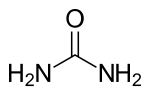
18th Century Vitalists argued that organic molecules associated with life would not be able to be synthesised from non-living matter. This hypothesis was disproved in 1828 when a German chemist, Friedrich Wöhler, reported that he had synthesised urea from cyanic acid and ammonia. Urea is a by-product of amino acid metabolism in mammals and a significant component of mammal excretions (birds excrete the related substance uric acid). It is the most common source of nitrogen in fertilisers for plants. Since 1828, virtually every molecule associated with living things has been synthesised in a laboratory from basic components.

Vitalist scientists once believed that one could prove the existence of this essence by weighing a body before and after it died. In the early 20th century this approach was put into practice by Dr Duncan MacDougall, though his results were inconclusive and his methods now look suspect. Dr MacDougall weighed his patients, bed and all, and the measurement error on his scales was sufficient to obliterate information at the level he claimed to be measuring. However neither Wöhler's discovery, nor any subsequent chemistry, nor MacDougall's failure completely destroyed the appeal of Vitalism, indeed in some circles it positively thrived.

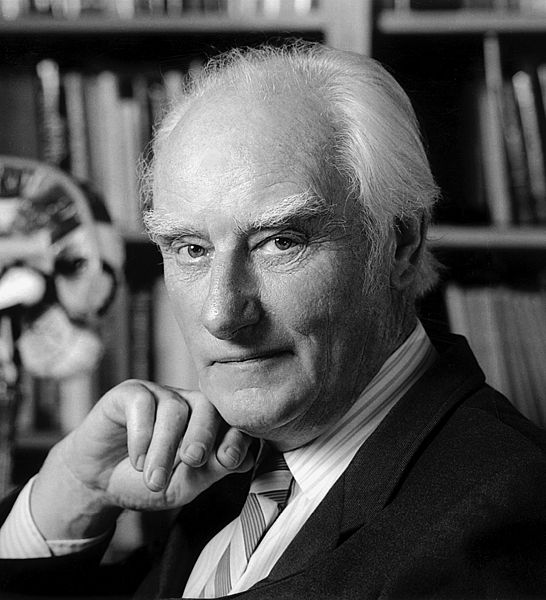
Many scientists have been focussed on continuing to undermine vitalism. For instance In a talk to Royal Society in March 2014 Dr Christine Aicardi described Francis Crick, one of the co-discovers of the structure of DNA, as an "anti-vitalist activist". Early in his career Crick had identified three problems related to disputes between Vitalists and Materialists (or between ontological dualists and ontological monists):
  • The frontier between living and non-living
  • Consciousness and the mind/brain question
  • The origin of life. 
Francis Crick
His first 27 years of scientific life (1949-1976) were spent at Cambridge exploring the first problem, where he helped to discover the structure of DNA and it's role in life and received the Nobel Prize. It's less well known, because his biographers down play it, but he spend the next 28 years (1976-2004) at the Salk Institute, San Diego helping to establish the scientific study of consciousness. In both places Crick joined the field at the beginning, when the mainstream attitude to them was frequently dismissive or even derogatory: molecular biology in the 1950's was seen as a quixotic discipline. Crick was instrumental in establishing both disciplines on a sound footing and getting the establishment to take it seriously.

It's even less well known that Crick briefly collaborated with Dr Leslie Orgel on the question of the origins of life. The two of them investigated the Panspermia theory that life arrived on earth from an extra-terrestrial source. But he decided to leave this area to Orgel. Aicardi argues that Crick's working life can be seen as vigorously pursuing an anti-Vitalist agenda and indeed as making a significant contribution to discrediting Vitalism, at least amongst scientists.

DNA
Francis Crick is a household name because his 1953 collaboration with James Watson, Maurice Wilkins and Rosalind Franklin in determining the structure of the DNA molecule earned the 1962 Nobel Prize in Medicine for Crick, Watson and Wilkins. Franklin died in 1958, aged only 37, and the Nobel Prize cannot be awarded posthumously. DNA was suspected to be involved in heredity since it is concentrated in the cell nucleus, but with the structure solved it could be seen how it was involved. We now know that the DNA contains codes for making proteins that perform a variety of structural and functional roles in a living cell. DNA and its close relative RNA are responsible for carrying information about how to build cells in all life on earth.

Defining the structure of DNA was an extraordinary breakthrough in our understanding of life. From it we have come to understand a huge amount about the function of living cells and what distinguishes a living cell from a dead one. We can now manipulate DNA at will, transferring genes from one organism to another, creating new genes. Recently an entirely artificial chromosome was synthesised and shown to be functional in a living cell. Of course we still have much to learn, but the distance between living and dead organisms, once thought to be an unbridgeable gulf, is now just a short hop. What we've discovered however is that complexity occurs at every level we examine. A living cell has tens of thousands of different proteins all doing vital work, each protein is itself a marvel of complexity. The problem of reverse engineering such a complex system is formidable. Ascertaining the structure and function of single proteins is the kind of work for which scientists have received Nobel Prizes. However it would seem to be only a matter of time before perseverance results in entirely synthetic "living" organisms. As one scientist said recently: "the conceptual unification of biology with physics and chemistry is now underway." - Aeon

But the Vitalist is loath to acknowledge the significance of these discoveries. They persist in the axiom that there is a fundamental difference between living matter and dead matter. So while the refutation of the basic propositions of Vitalism means is has been eliminated from the laboratory, it persists in the general population.

Presented with facts, Vitalists retreat into the unknown and base their truth claims on propositions that cannot be tested. This is also known as the God of the Gaps Argument. Whenever some advance in science means they are put to the test, and inevitably shown to be wrong, they simply retreat further into the unknown and make a different truth claim. As one prominent astrophysicist commented recently, the God of the Gaps argument suggests that "God is an ever receding pocket of scientific ignorance..." (YouTube) The God of the Gaps Argument is generally considered to be a poor argument for God and bad Theology. 

Since the idea of a jīva has been severely undermined by science, and since it was never very attractive to Buddhists in any case, the Buddhist Vitalist tends to focus on consciousness as the vital essence of living things. Traditionally Buddhists embrace a dualism between mind and body as expressed in nāma-rūpa or in rūpa versus the four 'mental' skandhas. The Salla Sutta refers to bodily (kāyika) and mental (cetasika) experiences. And since bodily transmigration is clearly out of the question, interest falls on the mind even though early Buddhist texts reject the idea that consciousness itself transmigrates.

Of course Buddhists argue against a direct transference and adopt the language of conditionality: the last moment of consciousness in one being gives rises to the first moment of consciousness in another. But how this is achieved is unknown. The idea is sketched out with metaphors, but the underlying reality the metaphors describe remains opaque and incomprehensible. The incomprehensibility allows for the Mind in the Gaps equivalent of the God of the Gaps argument. 


Science and Consciousness

The question of what is meant by the word consciousness is itself a book length project. I've explored this question to some extent in previous essays: especially What is Consciousness Anyway? One of my colleagues once remonstrated with me quite vehemently that "the study of matter will never tell us anything about consciousness!" This is very similar to the Vitalist argument argument about chemistry. In the early 19th Century the speculations of Vitalists concluded that there must be some fundamental difference between living matter and dead matter. Scientists showed that there is only one kind of matter and it all obeys the same rules. We can speak of living and dead organisms, but not of living and dead matter. Matter is just matter, it is neither living nor dead. "Life" is a property that is apparent only at higher levels of complexity and organisation. 

However the study of consciousness is still in its infancy compared with chemistry. Crick joined the Salk Institute in 1976 when the scientific study of consciousness was still seen as suspect, unscientific and even risible by the establishment. This kind of fact seems to be forgotten by those who argue that the only reason paranormal research is not taken seriously is the hostility of the establishment. What establishes a new field of study as bona fide is good science, replicable results and sound theories that make accurate predictions. The field of paranormal research has failed to do good science, and their theories make no accurate predictions. Indeed the paranormal field has been the victim of a number of high profile hoaxes: e.g. Project Alpha, crop circles, Uri Geller (still in business despite being exposed as a fraud!), the 100th monkey effect , and the Fox Sisters. In many cases the exposure of fraud has not deterred some believers from taking the supposedly paranormal effect as real. (See also my essay: On Credulity)

Crick on the other hand was instrumental in establishing two completely different fields about which the mainstream was doubtful, cynical and dismissive. Crick was able, in both cases, to produce results which forced the establishment to take notice. Another fine example of this is (my hero) Lynn Margulis, who fought for years against not only paradigmatic mainstream hostility, but also rampant sexism, to have Symbiogenesis accepted as a fact. It is now found in every biology textbook, but the original paper was rejected by fifteen academic journals. These days paranormal researchers publish in their own in-house journals and where the critique of the mainstream cannot reach them because when it does it generally debunks both their methods and conclusions. The 100th Monkey Hoax is one of the better examples of this. 

To-date the scientific study of consciousness has largely focussed on the way that consciousness is altered by brain injuries and other insults to the integrity to the brain. Even at this early stage we know that an ontologically dualist explanation of consciousness seriously struggles to explain what we observe. Clearly consciousness is tightly correlated with brain activity with a good deal of function/location specificity. Chemicals and highly location specific brain injuries create predictable breakdowns in the functioning of the mind. As imaging techniques become more sophisticated we are also starting to get glimpses of brain activity associated with various tasks (though it is very much early days).

If, as the Vitalist often argues, consciousness is able to completely separate from the body (and by implication the brain) then why does brain damage inevitably negatively impact on consciousness? No explanation which calls for an absolute distinction between mind and brain can account for this phenomenon in a coherent way.


Brains

As with the chemistry of life it's useful to start small. So scientists study small organisms with only a few neurons into order to assess the roles of the various structures involved. For example the OpenWorm project has mapped all of the cells of a particular kind of microscopic nematode worm. This organism contains 302 neurons and 95 muscle cells. On this scale they are able to map every single cell and all of the connections between cells: the somatic nervous system (282 neurons) contains 6,393 chemical synapses, 890 gap junctions, and 1,410 neuromuscular junctions. Such a map is called a connectome. Studying the organism at this level will give us a much clearer picture of how a nervous system creates behaviour. Scientists boldly claim that the computer models of the organism themselves constitute artificial life-forms, and while the enthusiasm is understandable, this is probably overstating things a little.

Partial Human Connectome
Since the structural units of the nematode are more or less the same as the structural units of a human brain - the difference is in the complexity of our brains - modelling the nematode's nervous system ought to give us insights into our own brains. The effects of scale are bound to introduce differences however - our brains have 100 billion neurons with 100 trillion connections. The emergent properties of systems this complex are impossible to predict.

Similar work is being done at a variety of levels. Larger scale maps of the human connectome are now emerging and recently a new technique for preparing brain tissue has revealed a 1:1 scale map of every neuron and synapse in a mouse brain (watch the video!). Meanwhile the Blue Brain Project is simulating individual cortical columns (as seen on TED) millions of which make up our neo-cortex.

However the Vitalist can dismiss all of this with one sweep of the hand because for them studying the brain will not reveal anything about subjective consciousness. Vitalists also argue that we'll never know what it is like to experience the world from someone else's point of view. I don't accept this for a simple reason that was evident to early Buddhists as well. Most of us are highly skilled at modelling emotional states using empathy - we do not simply guess what another person is feeling, we actually have the same experience as they do. How do we know it's the same? We communicate about what the experience is like and there are aspects of experience that are universal. A skilled story teller can make their audience laugh, cry, boil up in anger or cringe in fear. This could not happen if inner-states were truly unique. The fact is that we do know what it's like to have a point of view which is not our own. Some of us a better at it than others, but the ability is available to some extent to all social animals.


Conclusion

It's more than a century since any scientist took Vitalism seriously. It's not a theory that makes accurate predictions and has been shown to be inaccurate in many ways and on many occasions. However Vitalism still has its appeal outside the laboratory, especially with religious people. It appeals to that part of us that is disturbed by the idea of our own death, an area of particular concern to religion. The idea that human beings, often over and above other kinds of life, contain a vital spark, an essence, a jīva that not only animates us in this life, but which survives our physical death and makes an afterlife possible is an enticing prospect. If at the same time we are ontological dualists, with a predisposition to reject the impure material world then some kind of pure animating spirit is almost a requirement. The attraction of Vitalism is obvious. But the life ought to have gone out of Vitalism by now. It has been refuted time and again. Vitalism is like a philosophical zombie, suffering from partial death syndrome. 

Vitalism, like other non-materialist doctrines, survives and prospers by appeals to the unknown and unknowable. The truth claims of Vitalists by necessity lie just outside the province of scientific knowledge, where-ever the boundary happens to lie. The fact that Vitalism is found to be flatly wrong whenever the frontiers of knowledge advance is of no concern to anyone who can retreat into the unknown. Despite the fact that Vitalism has repeated been proved an inaccurate worldview, Vitalists still claim it cannot be proved wrong. Thus Vitalism is more in the realm of theology than science these days.

For Buddhists the attraction is not so much in physical Vitalism - the distinction between living and dead matter; as in psychological Vitalism - the interest is in sentience and in how that can be transferred (along with habits and memories) from one being to another. Explaining this is usually at least implicitly Vitalist - the metaphor of one fire kindling another is explicitly Vitalist. This view can easily come to the point of arguing that consciousness is what animates the living being.

~~oOo~~


The next essay in this series on Vitalism will look more closely at the transition from dead to living.
Related Posts with Thumbnails