21 March 2007

When Awareness is too much to bear

There's an image from near the beginning of the Tibetan Book of the Dead as translated by Chögyam Trungpa that has stayed with me. In the bardo we are confronted with Reality in it's pure form, but it is too intense and we flinch away, and then we are presented with Reality in a slightly less straightforward, but still pure, form, but it also is too intense and we flinch. We keep chunking down until we find a level of Reality we can deal with. In every moment Reality is staring us in the face but often it's too intense and we have to look away. And so we are bound to Samsara. It seems that all of us can only bear a little Reality at a time.

I love the phrase consensual reality! Most of the time it just means 'the level of reality which most of the community, or the collective, can handle over a sustained period of time'. What is meant, I'm sure, is not the mob, not the unthinking riot that can spontaneously break about amongst groups, but the more everyday conspiracy that we generally do tacitly consent to. This can be interesting for Buddhists because we are interested in consensus and we are interested in Reality. Buddhist practices aim to raise our level of awareness and to get us to consent to a higher level of reality. So we often don't consent to consensual reality, and that can be a interesting position to be in as anti-war protesters in Sri Lanka found last year when they were attacked by a mob of hardline pro-war bhikkhus! (which must be the acme of Buddhist oxymorons)

It's hard when one is depressed, to put on a good show as a Buddhist. If we hang around with other Buddhists a lot, and I do, then we can get these subtle hints, and sometimes not so subtle, that it is not OK that we are suffering quite so much and quite so publicly. Almost like we're letting the side down somehow. Everyone suffers of course, but some people suffering much more acutely, and witnessing this can make us very uncomfortable. Buddhists are meant to be happy, yeah?

Sometimes when ordinary reality is too much to bear things can escalate way off the scale and you end up in a realm of intense mental suffering, the Hell Realms. This is not an unfamiliar experience for me, and I know a number of people who when confronted with reality have, for instance, tried to take their own lives, or to harm themselves in any number of ways. Remember that everyone is flinching from reality all the time. If we flinch away from an experience that is incredibly painful then we are not behaving in a way that is different to our fellow humans.

The difference is merely one of the strength of the reaction. The more painful the experience the more we flinch, and that can take us into the Hell Realms. It's also important to remember that this is not a punishment. Not facing Reality is in itself painful. But for some reality is so painful that they will attempt suicide, or cut themselves, or numb themselves with strong drugs, or whatever. Sometimes the pain spills over into unskilful behaviour - anger, shouting, attacking - frequently the sufferer blames and punishes themselves which just makes things worse.

Now some people will immediately be able to relate to this - they will have their own experience of harming themselves in some drastic way in order to avoid experiencing reality. But the majority will not get what I am saying. You feel confused by extreme responses to suffering, you feel uncomfortable, you feel threatened, you feel afraid. Try this (with caution): imagine that you are a small, defenceless child, and that someone larger, or a group of people, is physically attacking you. How long does the attack last? Are you badly hurt, or just terrified? Was it a stranger, or someone you know and love? Were there witnesses and how did they respond: with kindness, with mockery, did they join in? Now imagine it all over again. And again. Do this at several times a day for several years. Imagine that you have almost perfect recall of the violent events so that the memories of being attacked and abused are, after decades even, capable of propelling your body into a fight or flight response - your heart races, your muscles tense, your breathing is shallow! Would you be willing to try this thought experiment? How far would you take it and what effect would it have on your mind? Would you chose to do it? Would you be able to? For some people, some times there isn't really a choice - those are our memories, that is our experience.

Sangharakshita points out that in the Tibetan Wheel of Life the Buddha who appears in the Hell Realms offers the beings there Amrita which has a double connotation. Amrita means "deathless" so it stands for the goal. Sometimes when you at rock bottom there is nothing to do but go for refuge. Amrita is also like ambrosia though, like a soothing balm. And this is something that beings in Hell need: they need to be soothed and cooled, they need a little relief. This may seem like a contradiction but sometimes what people who are suffering need is a little distraction. When you suffer intensely it is all too easy to be caught up in that, to feel like all there is is suffering. A little soothing distraction can create enough space around the hurt, enough perspective to allow a more creative response. It is said that the human realm is so special because it is only from there that Awakening is possible. Sometimes a little relief allows a being in Hell to approach a more human state from where anything is possible.

I don't think there's any way around the fact that we need to cultivate awareness, that we need to pay attention to what is going on. But compassion dictates that we allow for human weakness in ourselves and others, that we allow for flinching away from pain. Each person is the best judge of how much pain they can stand, and we need to let them make that decision for themselves. And maybe stand by with amrita.

image - detail from Michelangelo's Last Judgement.

13 March 2007

Buddhism and Interfaith Dialogue

Since the beginning Buddhism been in a constant dialogue with other religious traditions, which has been tolerant to some extent, but also critical and polemical. Buddhists have used parody, satire, re-contextulisation, as well as outright condemnation when the need arose. There is some really very biting parody of Brahmins in the Pali Canon, some very funny jokes at their expense! Sangharakshita is sometimes criticised, in a kind of weird reversal, for being critical of other Buddhists and expecially of Christians. It's as though we Buddhists have forgotten our own history and are buying into a modern myth which is telling us that all religion is ok, and not to rock the boat. However our own scriptures give the lie to that naive notion. Buddhism is and always has been quite a militant critic of unbelievers, and even of lax believers.

However Buddhism also has the interesting tactic of syncretising with indigenous beliefs. In China it bred with Taoism especially. Confucianists remained quite hostile because Buddhism appeared to deny filial piety - no family values for us! In Japan Buddhism formed an interesting syncretism with Shinto resulting in the identification of the Sun Goddess, Amaterasu, with the Great Sun Buddha, Vairocana. In Tibet there was Bon and the synthesis of Buddhism and Bon has been a very dynamic hybrid indeed. However in India there were a number of major faiths with which Buddhism interacted and syncretised. Firstly there was the Vedic religion which gave us such concepts as Brahma Vihara, and Going for Refuge. More crucially there was the later interaction with Puranic Hinduism - and especially with the worship of Siva. Siva had gone through a long process of being absorbed into mainstream Indian faith through being identified with the Vedic Rudra. This was a bit of a stretch to be honest, but the Brahmins were very good at this sort of thing, offering to make the preists of competing cults into honorary Brahmins for instance. In the Mahayana Karandavyuha Sutra we see Siva being gently converted into a Buddhist, just as Brahma and Indra were in the Pali Texts. But in the Sarvatathagata-tattvasamgraha Tantra the action has been stepped up a notch. This time Siva refuses to submit, and Vajrapani kills him and tramples on his body (which is what we see in the depictions of Vajrapani). He brings him back to life however and converts him to Buddhism - both the killing and ressurection are accomplished with mantras.

But here's something interesting: I was searching around for a pic of Vajrapani doing a two-step on old Siva and his wife, and it took some time. In a lot of images they are left out and Vajrapani is just dancing around on his own - which doesn't make a lot of sense and ignores the context for him being wrathful and stomping in the first place. An important function of Vajrapani was (right back in the Pali texts) and is (in the Tantras) the thumping of people who fail to pay homage to the Buddha. Has Vajrapani been sanitised for public consumption I wonder?

We will probably never see a depiction Jesus being trampled by Vajrapani the way that Siva is because, at the time and place the Vajrayana was emerging, Siva worship was the prevailing religion, and it was a vigorous living force and a threat to Buddhism. Christianity has been in a slow decline for centuries now, and although western culture is nominally Christian, the evidence is that it is dying. The Pope (take your pick) will occasionally say something along the lines that although Buddhism has some good points it really is a failure because it is humanist, but it's like being savaged by rabbit. And the Dalai Lama is also titled His Holiness these days. In any case Christianity is fighting on many fronts. With militant Islam constantly in the news, basic Christian values being undermined, not to mention in-fighting and schism over the status of women and homosexuals; the Christian clergy really don't see Buddhism as a problem - we smile a lot and so they think we're harmless. Tee hee.

I don't see much on offer from theology generally which which to syncretise in the West. Philosophy does seem to have some promise, but I'm not well versed enough to know how things might mix and match. I think the '-ology' which provides the richest pickings for a syncretism in the west is not theology, but psychology - especially depth psychology which had its beginnings with Carl Jung, and which sees psychology as a manifestation of archetypes of a deeper layer of reality. It is said that Jung was strongly influenced by Eastern religion, and by Tibetan Buddhism in particular. So perhaps the syncretism has already begun. Perhaps we will see Freud and Jung being trampled by Vajrapani sometime soon in a Tantra near you. Now that might be interesting.

01 March 2007

Ratnasambhava quest que cest?

Five Buddha Mandala by Aloka, from Padmaloka websiteLately I have been pondering the mandala of the five Jinas. Something was puzzling me. Amitabha and Akshobhya represent a set: compassion and wisdom. Vairocana clearly is a development of the Buddha. Early tantras have a trinity of Amitabha, Shakyamuni, and Akshobhya. Wisdom and compassion are clearly the two most salient features of a Buddha and it makes sense to represent them as individual Buddhas. However the tantras introduced a set of five Buddhas, which by about the 7th or 8th century CE had settled down into Akshobhya, Ratnasambhava, Amitabha, Amoghasiddhi, and Vairocana in the centre. Clockwise from the east which is at the bottom in the image.

So where did Ratnasambhava and Amoghasiddhi come from? This is something of a mystery. The standard texts such as Snellgrove's Indo-Tibetan Buddhism note the appearance of the pair, describe them and then move on. There is nothing about the process, nor about why they make a pair. Do they make a pair? Ratnasambhava is in the south, is golden yellow, is lotus throne is supported by horses, his mudra is the varada or giving mudra, and his emblem is the jewel - his name means Jewel Born. He is associated with the sun at midday. Ratnasmabhava's wisdom is the wisdom of equality which sees the that everything has the same nature, which is the nature of Shunyata.

Amoghasiddhi is in the north, is dark green, and his lotus throne is supported by shang-shang birds (these are garuda birds with human torsos and heads who play cymbals.) His mudra is the mudra of fearlessness and his emblem is the crossed vajra. In Sanskrit it is vishva-vajra, where vishva means something like "on all sides". Amoghasiddhi's wisdom is the wisdom of fearlessness. The Buddha kula that he presides over is known as the action family and his name means Unobstructed Success.

The breakthrough in understanding this pair came while attending a communication course with Locana. Over simplifying a bit, the model of communication and connection that Locana was describing begins with observation. Feelings arise from these observations. These feelings connect us with, and flag up, our values or needs. And out of this we move into action, or we make a request. The details are not important, but what struck me was that three of the steps in the model - observation, feelings, and actions - could relate to three of the Buddhas in the mandala. Obervation is intellect, but also brings to mind the mirrorlike wisdom which sees things just as they are. Feelings are obviously connected with red Amitabha's compassion. Action as I just mentioned were the concern of Amoghasiddhi. What was left out was values. The values, or sometimes needs, that are referred to are universal human values that we can all understand and connect with. They are the key to understanding conflict and connection. And it struck me that values is what Ratnasambhava corresponds to.

The jewel that Ratnasambhava holds is the cintamani, a symbol for the Bodhicitta. This is surely the highest value of Buddhists. We value Awakening as the most value thing. Generosity is the most fundamental virtue in Buddhism, which is to say that we value it highly. Generosity is sometimes seen as the best practice for lay people, whereas Awakening is the goal of serious practitioners. Generosity builds us merit which will a lay person to be born in fortunate circumstances, i.e. in circumstances where they can practice seriously and Awaken. In a mundane sense Ratnasambhava represents wealth. One of the main Bodhisattvas of his kula is Jambhala who holds a mongoose which spews forth jewels when squeezed. So yes, this does seem to fit. Sangharakshita has associated Ratnasmabhava with beauty and art. I think this is covered by the idea of value. Beauty is the object of aesthetic appreciation, and paying attention to beauty, according to Sangharakshita, helps to refine our senses. Refining our senses can help us to make progress towards experiencing more refined states of mind. Finally great art can help to transform our lives by inducing in us a reflection of the inspired state of the artist.

I suspect that Amoghasiddhi came first however. In the early tantra there were three Buddha kulas. At around the same time a group of three Bodhisattvas appeared in Buddhist art. Avalokiteshvara, Manjusri and Vajrapani represented compassion, wisdom and energy. The word translated as energy is virya. Virya is energy in pursuit of the good, ethical energy. It is energy directed towards Awakening. Amoghasiddhi is the Buddha of action, and this action is motivated by, and directed towards, the good. And the good is represented by the jewel held by Ratnasmabhava. So yes Ratnasambhava and Amoghasiddhi do represent a pair.

Another observation has occurred to me in the last few days. Ratnasmabhava is a solar deity, he is associated with horses, is associated with giving, and is associated with art, beauty, and inspiration. Now there is another Indian deity who shares these characteristics and that is Agni. Agni is one of the old Vedic gods whose worship is outlined in the Rigveda. The word agni is cognate with ignite, and he was associated with the sacrificial fire, but also anything which burned including digestion, and the sun! So Agni is synonymous with the sun. The largest and most elaborate sacrifice in the Vedic calendar was the horse sacrifice - which is described in the first book in the Rigveda. Finally it was through possession by Agni that the Vedic sages were able to give voice to the ecstatic inspired hymns which make up the Rigveda. He is the source, the spark, of imagination and poetry - the highest art of the Vedic period.

This kind of absorption, if I am right, should come as no surprise. This is what the history of Indian religion is like. Buddhism adopted and absorbed deities from the earliest times, so that Indra is a frequent character in the Pali Canon for instance. The five Buddha mandala is a feature of esoteric Buddhism, which is itself a grand synthesis of seventh century Indian religion.

image by Aloka from the Padmaloka website.

23 February 2007

Buddhism and Hinduism

I'm just back from a foray down to London where I picked up a copy of Alexander Studholme's book The origins of Om Manipadme Hum : a Study of the Karandavyuha Sutra. I read enough on the train coming back from Cambridge to have a major realisation.

Some time ago in pursuing my interest in mantra I began to delve into Vedanta and Veda. Buddhists seem not to write that much about mantra. Leaf through any book on Tibetan Buddhism and it will contain at most a couple of paragraphs about mantra - usually they trot out the folk etymology from the Guhyasamaja Tantra, and something about mantras being symbols of Awakening. Given that this is not really what mantras are used for, either popularly or in the Tantras themselves it has always puzzled me. Kukai, the Japanese Vajrayana master, by contrast is preoccupied with what mantra is, and how it works and is a lot more informative. In any case Vedic scholars of mantra, while not exactly abounding, outnumber the Buddhists by at least 10 to 1. I became especially interested in those linguists from the pragmatist school, and in the cognitive linguistic approach of George Lakoff.

It emerges, when one takes the time to study them, that Buddhism is rather heavily indebted to the Vedic religion. This had already begun to dawn on me when I discovered Richard Gombrich. His How Buddhism Began is misnamed but goes a lot further into this area than I had managed (it helps if you can read Sanskrit!). While attending his lecture series last year I became even more deeply acquainted with Gombrich's ideas, and with those of Joanna Jurewicz who has explored some of the same territory from the Vedic point of view. It became obvious that the Buddha knew the Brihadaranyaka Upanishad, and probably the Chandogya as well. He quotes and parodies these texts, and what's more makes use of metaphors that only make sense if you know the Upanishads. It's clear that the people who wrote down the Pali Canon had already lost the sense of some important metaphors - Brahma Vihara is a stand out - by the time the Canon was finalised in about the first century BCE. Jurewicz, also a fan of Lakoff, has shown that the well know sequence known as the Nidana Chain, can be viewed as a Buddhist polemic of Vedic cosmogony. To me this is a revelation. What it says is that despite Buddhist chauvinism against Hinduism, some central features of our discourse - going for refuge for another instance - are directly traceable to the Vedic discourse current in the 5th century BCE when the Buddha was active.

In tracing the arc of mantra as it traverses the Rigvedic period and into the Vedantas there is a reasonably logical progression which relates to the abstraction of the meaning of rituals. The basic shift was from external rituals to imaginative internal rituals. To put it a little simplistically here was a movement away from the fire rituals and the development of meditation as a substitute. The connection with early Buddhism is detectable in the Paritta texts, and in certain magical rites especially the so-called Saccakiriya or Act of Truth.

However from there the trail is quite faint. Dharanis, which are not quite mantras as they appear in the Vajrayana, and yet very different from any use of words/language in early Buddhism. They begin to appear in texts such as the White Lotus, the Golden Light, the Lankavatara etc, in about the 4th or 5th century CE. You will often hear that a Dharani is a sort of aide de memoir for Dharma teachings, but I'm here to tell you that none of the Dharanis that appear in the above named sutras look like that. It is true that as early as the Lalitavistara there were "alphabets of wisdom" where the syllables of Sanskrit (more or less) were associated with aspects of Dharma teachings about the nature of phenomena. But the link between this idea, which is followed up in the Perfection of Wisdom texts and the Mahavairocana Sutra, and the actual dharanis in sutras is not credible. It has always seemed to me that the presence of those dharanis, in the absence of any exegetical tradition, must remain a mystery. I'm not so sure now.

It began to seem as though the appearance of what were called mantras in the Tantric texts came out of nowhere as far as Buddhism is concerned - and yet the obvious presence of magic speech in the Pali texts made it seem a rather unsatisfactory conclusion. Did the practices and ideas completely die out and have to be re-imported several centuries later? Or was there a link I was missing? But one more back-track. Many years ago now Sangharakshita noted, almost in passing, that the presence of the goddesses Sri (aka Laksmi) and Sarasvati in the Golden Light Sutra represented some lumps of only partly digested Hinduism. Of course we know that the Vajrayana contains a fair number of the lumps at various stages of assimilation. Studholme, in his study of the Karandavyuha Sutra seems to have caught a snap shot of the historical processes at work, and to explain how those lumps might have got their.

Early Buddhism existed in a milieu which was largely twofold, with the old Vedic religion on the one hand, and the more experimental and disparate Samanas on the other. The Pali texts are full of polemic and critique of Brahmins, Jains, Ajivakas and non-Buddhists of every sort. Brahmins and their theology get the bulk however. Five of six centuries later however a change in the religious landscape had taken place. Probably in response to the success of Buddhism in the centuries following Asoka, the Brahminical tradition began to reorient itself away from the Vedas, and towards almost equally ancient texts known as Puranas. These texts emphasise a different set of gods, so that Indra, Agni, and Brahma, give way to Vishnu. At the same time the assimilation of the tribal religion which worshipped Siva was more of less complete. Sacrifices gave way to devotional practices known as puja. This is more of less Hinduism as distinct from Vedism. Not that the Vedic tradition disappeared completely - India doesn't seem to ever completely abandon any religious idea.

So the Mahayana grew up in an entirely different milieu to early Buddhism. And what Studholme has shown is that Mahayana Buddhism was in as close a dialogue with devotional Puranic Hinduism as early Buddhism was with Vedism and Vedantism. This accounts for the apparent discontinuities which I have observed in the use of magical words. One of Studholme's main theses is that the Om Manipadme Hum mantra was part of a response to Puranic Shaivism, and bears a close relationship to the Saivite mantra Om Namah Shivaya. I haven't read far enough to know what to think of that yet, but from what I've seen it promises to be fascinating!

17 February 2007

The White Rite

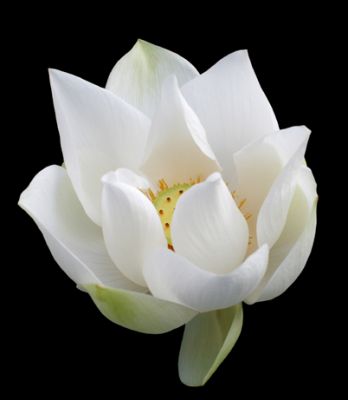
White Lotus, White RiteThe colour white has a very interesting range of associations. In Herman Melville's book Moby Dick the white whale became the focus for all the rage and hatred of Captain Ahab. Melville devoted a chapter of Moby Dick to exploring the negative symbolism of white: the white of pus and maggots and putrefaction for example. However we more often associate white with purity and cleanness in a ritual sense. Virgin brides are married in white. Fresh snow is also sometimes referred to as virginal. The Pope wears white. Being the opposite of black, it symbolises good, light, positivity, and space. From India we have the wonderful image of the while lotus rising unstained up from the mud. White light may be split into the colours of the rainbow by a prism, or a rain drop; but the same process in reverse combines the colours of the rainbow back into pure white light: an important observation for our understanding of the White Rite. The White Rite is the rite of purification - or more traditionally the rite of pacification. This rite is used to pacify impulses arising from greed, hatred and delusion, hence the association with purity. In the more mundane sense the white rite is also to pacify demonic forces in the world around us.

In terms of the mandala the white figure sits at the centre. There are a number of Buddhas and Bodhisattvas who appear in white forms, the most important being Vairocana, Avalokiteshvara and White Tara. The white figure at the centre of the mandala possesses and integrates all of the qualities of the other figures - Love, Fearlessness, Wisdom, Abundance; and yet adds some new subtle quality that is difficult to quantify. Vairocana - the Illuminator - is an ancient Indian figure who predates Buddhism by many centuries. He is the sun, of course, in its most benign aspect. Spiritually he illuminates the darkness of ignorance. Holds the dharmacakra, which identifies him with the Dharma - it is not that he possesses or teaches the Dharma: no, he is the Dharma.

The wisdom of Vairocana is known as the Wisdom of the Dharmadhatu (dharmadhātujñāna). Dharmadhatu is synonymous with śūnyatā, tathatā, and the dharmakāya: i.e. it stands for the Reality Principle. These Buddhist technical terms are rather abstract and abstruse, and do not really convey much. Indeed it is sometimes said that one cannot say anything definite about the dharmakāya. Which leaves us with a puzzle: if this wisdom is so abstract as to be inconceivable, then of what practical value is it to us. In terms of the Tantric Rites, how might we bring this quality into our practice? I have explored a number of ways to do this. As I mentioned in my essay on the Red Rite, I do not follow the tradition closely because it is not easy to see how the old magical rites would work in a modern context.

Purity in Buddhism is equated with purity of intention, since it is intention which underlies actions (karma), and it is the results of actions that prevents us being truly free. So one aspect of the Wisdom of the Dharmadhatu is moral purity - in Buddhist terms keeping the precepts. In terms of the ten precepts followed by members of the Western Buddhist Order (and in Shingon) this means: kindness, generosity, contentment, truthful kindly harmonious helpful speech, and tranquillity (non-greed), love, and wisdom. Each time we exercise our moral judgement, each time we decline the act that we know will lead to suffering, we are exercising the White Rite. Of course if we do find ourselves acting unskilfully we can confess it to some appropriate person. This too is an example of the White Rite - the experience, and acknowledgement of remorse can be a powerfully transformative practice. This of course has nothing to do with guilt or atonement. Remorse is simply turning the moral spotlight on our own actions. Neither has it to do with sitting in judgement on others.

Something that Kūkai writes about in connection with the dharmakāya gives us another clue to the White Rite. He says that all forms are the body of the Dharmakāya Buddha, all sounds are his voice preaching the Dharma, and all mental activity is his Awakened mind. This sounds a little theistic at first, but Kūkai was not suggesting that Vairocana is a creator god, but pointing towards something more subtle. All things are marked by impermanence, insubstantiality and unsatisfactoriness. So everything can be said to be of the same nature. If we anthropomorphise the metaphor then we may say that everything is a manifestation of Vairocana, who is reality itself, who is the very impermanence of all things. Putting this into practice we can try to see the Buddha everywhere, hear the Dharma everywhere, and cultivate a sense of identification with every living being. To give a more concrete and contemporary example: we know that human impact in the environment is causing problems. So each time we consciously, for example, minimise our own impact by recycling, or reusing, or using low energy light bulbs - then we are acknowledging the truth of interconnectedness and exercising the White Right. This is interesting because it suggests that the colour of the Buddhist environmental movement might be white rather than green which has quite different traditional associations.

We know that Tantra adopted the old Vedic magical principle of bandhus or associations between levels of reality. So in each quarter of the mandala there is a Buddha who has a colour, and various other associations. At the other end of the scale there is a kleśa - a defilement - associated with each Buddha. In the case of Vairocana the defilement is ignorance. This kind of ignorance is sometimes known as viparyasa or topsy-turvy views. We see the impermanent as permanent for instance or the painful as pleasant. The White Rite is concerned with dispelling this kind of ignorance. We can only doing this by paying attention. After my first brush with the Dharma I wrote this in my journal, although I no longer recall the source, that an aspect of suffering is "a desperate will to live unrelated to serious or systematic attempt to understand what life actually involves". Practising Buddhism is precisely the opposite - it is an attempt to live on the basis of a serious and systematic attempt to understand what life involves. And this again is the function of the White Rite.

As with the Red Rite I'm suggesting here that the magical tantric rites can operate in an everyday way. In this case every time we acknowledge and act in accordance with the way things are - when we choose to act skilfully, when we see ourselves as interconnected, or when we try to see more directly how things really are - that is the White Rite in action. This is Buddhism as the path of purification.

19 January 2007

Jai Bhim!

Dr B R AmbedkarThink of an Indian politician - chances are if you are a Westerner you either thought of Gandhi or one of his scions. I usually don't like to write about politics or politicians since it only seems to encourage them. In this case however there is a definite tie in with Buddhism in India, so I'll break my own rule just this once.

Now if I asked an Indian Buddhist the same question they would most likely not think of a Gandhi, they would be more likely to think of Dr. B.R. Ambedkar. In fact if you asked them about Gandhi they might be quit dismissive of him - which can come as a bit of a shock to those who think of him as a kind of saint who did so much for the oppressed people of Indian. So why would an Indian Buddhist think like this?

The simple answer is this: caste. Caste is the system of social stratification which goes back a 100 generations in India. It attained the status of immutable law early in this era, and is still central to Indian society. Most Indian Buddhists were born into social circumstances, i.e. into a caste, which not only oppressed them, but tried to cut off any escape routes. Caste is strongly linked to the Hindu idea of karma - which has similarities and differences from the Buddhist idea. The main thing here is that one's station in life is determined by the caste one is born into, and that is determined by actions in a past life. If one is born into poverty, oppression, poor health, and few opportunities, then one must deserve it, and one must accept it as one's lot. Clearly this ideology could only have been thought up by a privileged elite. Some castes were thought to be so low down the evolutionary scale, to have committed such heinous crimes in their past life and so brought penury upon themselves, that the mere touch of them polluted a higher caste Hindu - they were the untouchables.

Dr Ambedkar was born into the Mahar caste and at that time the Mahars were untouchable. This typically meant that they were forced to do the dirtiest, lowest paid, most dangerous jobs, denied education, and oppressed in various other ways. Ambedkar managed to escape his fate. Ambedkar found a liberal and philanthropic mentor and sponsor who paid for his education. Mind you he still suffered severe prejudice - and famously had to sit outside the classroom of his primary school listening to lessons through the window. Ambedkar persevered and eventually gained a doctor of law degree from Harvard University. He went on to become the first law minister of India in the Gandhi lead government. Ambedkar was the architect of the constitution of India, and importantly for his people succeeded in the abolition of untouchability.

Clearly Ambedkar was a great man who inspired his people to raise themselves out of the dirt. But why the antipathy towards Gandhi? Gandhiji opposed Ambedkar's desire to free all Indians from caste. Ambedkar proposed abolishing caste altogether, but Gandhi resisted him. He even went on one of his famous hunger strikes to force Ambedkar to back down and water down his anti-caste legislation. Gandhi believed that caste was what held Indian society together. He wanted to maintain caste duty for Hindus which meant dirty hard labour for the untouchables, but to show that it wasn't personal he suggested changing their designation from untouchables to harijans or "children of god". Gandhi spoke out against oppression, against religious intolerance, but he also supported the status quo of the caste system. Gandhi was a Brahmin. The cynical would simply say that was protecting the interests of his caste, or perhaps that he knew that high caste power brokers in India would not accept the ex-untouchables as equals.

1949 came and India became independent and the people formerly known as untouchables did begin to be able to make a few changes. But caste prejudice persisted and the uplift of the oppressed people was resisted. Ambedkar decided that Hindu prejudice against them was too strong. After lengthy consideration he became a convert to Buddhism, and led millions of his people to abandon Hinduism and embrace the Buddhadharma. This did not end the prejudice however nor the persecution, but it helped to give these oppressed people a vision of freedom for themselves and their children.

People who are born into those communities which were formally designated as untouchable, now refer to themselves as Dalit - oppressed. The Dalits revere Ambedkar as a bodhisattva, as a saviour who showed them how they could be free. They don't revere Gandhi because Gandhi was unwilling to treat them as equals. Attacks on Dalits continue to be common place in part so India. On 26 September 2006 Ambedkar's home state of Maharastra was rocked by the brutal rape and murder of the family of a Dalit man. The attack was allegedly committed by high caste Hindus in revenge for his opposition to the building of a road through his fields, and sparked a series of protests and strikes in the State.

October the 14th 2006 marked 50 years since the conversion of Dr Ambedkar to Buddhism. His followers greet each other with Jai Bhim! which means Victory to Bhimrao (Ambedkar)!

I recommend the BBC radio program Escaping Caste

01 January 2007

Women and Buddhist Ordination

Women in India - photo by DhammaratiIn the last couple of months I attended a series of lectures by Professor Richard Gombrich. These were very stimulating lectures and gave rise to many interesting discussions subsequently with the friends who also attended them. I have several raves to write as a result.

What I want to write about today is women. Specifically I want to take a bit of a look at the Buddhist ordination of women. I practice in a tradition, if it can be called that, in which men and women receive ordination on an equal basis - no extra rules or precepts for women, no extra conditions. It is an explicit acknowledgement that men and women are equally capable of going for refuge to the three jewels. Now in our spiritual community it is sometimes said that despite the equivalence of the ordinations, women have not always been treated as equals. Indeed one of our senior order members wrote a book which dwelt on the traditional Buddhist view that women are spiritually inferior, and sought to justify that view - which is not a line of argument I wish to pursue!

Professor Gombrich was exploring the origins and greatness of the Buddha's ideas and mentioned the case I'm about to explore in passing in an early lecture. Women, so the story goes, were admitted into the Buddhist Order reluctantly and then only with special pleading from Ananda on behalf of the Buddha's aunt Mahāpajapati. The admission of women, it says in the 10th chapter of the Cullavagga book of the vinaya, would be contingent on a number of conditions: they must accept a number of extra rules; have a status lower than the lowest male bhikkhu; and show all bhikkhus respect. Even so the admission of women to the Sangha is said to have shortened the lifespan of the Dharma!*

This is, or should be, fairly familiar ground to students of Buddhism. It does not sit well with us westerners though, especially in this post-modern, post-feminist era. We accept in theory, if not always in practice, that men and women are equal. I think this has been a serious sticking point for many women and not a few men approaching the Dharma! So I was intrigued when Professor Gombrich drew my attention to the verses of Bhaddā Kundalakesa in the Therigatha (107-111). These verses, he says, show that the idea that the Buddha was reluctant to admit women to the order was a later falsification. I will mostly use the translations of K. R. Norman because although C.A.F. Rhys Davids includes portions of the commentaries in hers, Norman's is more clear - fortunately both are printed together in my copy**.

Bhadda was a Jain ascetic, who was drawn to the Buddha after losing a debate with Sariputta. The verses begin:
With hair cut off, wearing dust, formerly I wandered, having only one robe... (107)
This much is enough to identify her as a Jain - dust is a primary Jain metaphor for karma, and clearly she is a wandering ascetic very similar in description to other samaṇas in the the Canon. One of the arguments offered for the Buddha's reluctance to ordain women was that it might have created a dangerous precedent at a time when only men were ascetics. Not so according to this text - there were women Jain ascetics. The commentary suggests that her hair was not so much cut, as pulled out by the roots.

Verse 110 begins:
Having bent the knee, having paid homage to him, I stood with cupped hands face to face with him (110a)
The key second half of the verse runs in Pali:
ehi bhadde'ti maṃ avaca, sā me āsūpasampadā (110b)
Which I translate as
Come Bhadda, he said to me; that was my ordination.
Now this is very interesting indeed. Bhadda goes to see the Buddha, and on the spot he confers on her the higher ordination!

I want to point out a few salient features of this passage. Firstly the formula "ehi bhikkhu" (= "come bhikkhu") is usually considered to place a text very early, before the whole rigmarole of lower and higher ordinations, or even formal vinaya rules came into being. In the beginning the Buddha would just say to you "come", and that was it, you were a bhikkhu or bhikkhuni. I've taken the trouble to include the Pali because the word for ordination in the text is a variant of upasampadā which stands to the higher or full ordination - this by the way, is what it means when someone refers to themselves as a "fully ordained Buddhist monk or nun".

By the time that the story of Mahāpajapati things were a lot more complex. Ascetics from other traditions had a two year stand down period before they could take the lower ordination. They then had to make satisfactory progress as a samanera, or novice monk, before being granted the higher ordination. And as I have already pointed out women had a series of additional rules imposed upon them.

So the instant higher ordination of Bhadda is remarkable in several ways: it is clearly early, there is no hesitation, and there are no extra rules or conditions, and the Dharma is not cut short by 500 years! This story is apparently a one off, but often a one off can be very telling, especially in this case since the Canon has been edited to conform to orthodox Theravada belief at the time it was written down. Bhadda it seems slipped through the net! Having looked at the text, and knowing a bit about the background I find myself agreeing with Professor Gombrich that the whole set up for women with it's low status and extra rules is a late addition, and probably reflects the prejudice of a time after the Buddha.

Notes
* Ute Husken. 2000. The Legend of the Establishment of the Buddhist Order of Nuns in the Theravada Vinaya-Pitaka. Journal of the Pali Text Society. (Vol XXVI, pp.43-69).
** C.A.F Rhys Davids and K.R. Norman. 1997.
Poems of the Early Buddhist Nuns : Theriigaathaa. (Oxford : Pali Text Society).

see also Bhadda Kundalakesa at Access to Insight


image: dhammarati

06 August 2006

Coming into being

- for Pema Yutso

Buddhism can seem a bit dour at times, and indeed Buddhists are often accused of negativism or pessimism. It is true that the inevitability of suffering is of central interest and importance, however, as Sangharakshita has pointed out (in A survey of Buddhism) this interest is actually methodological. We use suffering as a starting point for reflection because it really is universal, and because it is experiential rather than conceptual. So suffering is something that everybody can relate to, and we don't get bogged down in definitions. Suffering also motivates us to change!

But as everybody knows life is not 100% suffering. There are moments of relief, of pleasure, gratification and satisfaction, moments even of grace. We Buddhists harp on about old age, sickness and death, but there is also birth, growth, renewal and wellness at times. The central plank of all Buddhist philosophy - paticca-samuppada in Pali or pratitya-samutpada in Sanskrit - is variously translated as 'dependent arising, or conditioned co-production'. This suggests to me that even though we tend to focus on the passing away aspect of reality, that the arising or coming into being of things is really very important.

Any given event is the result of the collision of an immense, perhaps infinite, number of factors which adhere and coalesce to give a sense of something coming into being. And this means that the coming into being is completely mysterious, that the arising of feelings like, say, anger or grief are not ultimately reducible to a single cause - if we are angry or sad there will have been a number of causes which include a predisposition to that emotion which we can by no means blame on our friend!

The trouble is that we get lulled into a false sense of knowing by the seeming reliability of the world. The laws of physics always apply in the world. So we think we understand what is happening when things fall to the floor - that is gravity, and when you let go of something it falls. The physical fact of gravity is a constant, but we tend to isolate it when we think about events. So we can get trapped by this apparent reliability and fail to observe that most of the event was completely unpredictable. For instance if someone drops our favourite cup and it breaks then our reaction can be completely changed by how we were feeling at the time, or whether we had a good nights sleep the night before, whether the cup was full of liquid etc, etc. One day we might pass over it as an unfortunate accident, and the next it will seem like a major catastrophe. If one person drops our cup we immediately forgive them, if it is someone else we may hold a grudge for years. As predictable as the physical world is, our subjective inner world is unpredictable.

It is good to notice how the process of arising is going on all the time. If you watch it then you can easily see how your attention flits about like a butterfly between the senses, and between objects in any one sensory field. Each time we become aware of an object of the senses - something arises in our minds. If you sit in a room for an hour then not much may change - the furniture doesn't usually spontaneously move or fall apart - but our attention is constantly moving and flicking from one object to the next so that we are constantly changing our focus and something new is arising. We live immersed in a number of sensory fields which present a constant flux of impressions - sights, sounds, smells, touches, tastes, and from the Buddhist point of view thoughts, memories, associations, judgements, and emotions. Each time we take in a mote of sensory data there is a cascade of responses that are mostly out of our control. We do this so many times a second that it seems that, rather than a series of discreet moments, that there is a continuum, and that there is someone watching the play of the senses making 'sense' of of it all. But this is an illusion just the way that 25 frames per second of film images projected onto a screen gives us the impression of smooth movement when watching a film.

It can be a bit depressing to focus on the passing away aspect of reality. Especially when a friend is, for instance coping with the impending death of a parent, or feeling depressed. Yes things are always passing away, yes we ourselves with pass away, but look... every moment something arises, even if only within our own minds. There is so much arising going on! Every moment there is something new in our awareness, and that means that every moment contains the potential for freedom!

Not only this but paticca-samuppada comes in two flavours. In one there is a cycling between opposites - pleasure/pain, birth/death. In the other things build up. A acknowledgement of suffering leads to faith, which leads to joy, which leads to happiness which leads to rapture etc until one thing leads to another and one is liberated. Usually we think of freedom from suffering as a result of removing the causes of suffering. What this second type of paticca-samuppada tells us is that freedom from suffering also arises in dependence on causes. If it did not, then we could never escape from suffering. This is the Buddhist equivalent of "The Good News" - we can help to set up the conditions for the arising of freedom from suffering.

So next time you have a moment, just notice all the many things which are arising in your awareness, or the new things coming into being, and have a little celebration. Although at times that arising seems chaotic and out of control, it is that very arising which means we that we can experience the Deathless state. It is always good to be aware of what we are paying attention to, and to exercise such choice as we have in the matter, and to develop that ability to choose, but there's no law that says that because we are Buddhists we must focus on the depressing aspects of life. Yes, there are those kinds of practices, but it's a matter of appropriateness and applicability. It's OK to focus on the coming into being aspect of the world at times.
Related Posts with Thumbnails