18 November 2011

A lesson from the Tevijjā Sutta

brahmins
This is an extract from my (unfinished) translation of the Tevijjā Sutta, but I'm presenting it with a little twist. In this extract I have replaced "Brahmins" with "Buddhist Teachers" and "Brahmā" with "Nirvāṇa", and tweaked the text a little to fit around the change - the structure and most of the dialogue is a fairly literal translation of Pāli however. I will admit that in doing this I intend to be provocative. However I think this is an interesting exercise.

Tevijja Sutta
D 13, D i.237-8

"So, Vāseṭṭha, you are saying that you cannot decide between what your two teachers are saying. But what is the nub of the argument? Why is there disagreement?"
"The path and not the path, Gotama. Various Buddhist teachers – Zen, Pure Land, Tibetan, Theravada, Triratna – all teach a way out for one seeking Nirvāṇa. Just as if there were a town not far away, and even though there were many roads, they all converged at the town: so these Buddhist teachers teach a variety of ways out of saṃsāra.

"Did you say 'they lead out' Vāseṭṭha?"

"I did say 'they lead out' my dear Gotama."

"But, has any of these Buddhist teachers personally seen (sakkhidiṭṭhi) Nirvāṇa?"

"They haven't."

"So, have any of the Buddhist teachers' teachers personally seen Nirvāṇa?"

"They haven't."

"Well, have any of these Buddhist teachers, as far as the seven generations back, personally seen Nirvāṇa?"

"They haven't."

"But what about those ancient Buddhist teachers , the sages who made the suttas, and handed them on, the old texts that were chanted, proclaimed, and compiled that the Buddhist teachers today chant, recite and repeat – repeating what was said, speaking what was spoken – what about them? Did they say 'we know this, we see this, we know where Nirvāṇa is, the location of Nirvāṇa, and the way to Nirvāṇa?'"

"No, Sir."

"From what you've said, Vāseṭṭha, there is no single one amongst the Buddhist teachers , who has gone to Nirvāṇa personally; none of the teachers, or their teachers, up to the seventh generation of teachers, and none of the ancient sages can say 'we know Nirvāṇa'. These Buddhist teachers say 'though we do not know or see, we teach: this is the only way, the straight and direct way leading out of saṃsāra for one seeking Nirvāṇa.'"

"What do you think, Vāseṭṭha, this being the case, isn't it true that what these Buddhist teachers say is just religious cant?"

"Yes, Gotama, that is certainly the case."

"It's just as if there were a line of blind men – the first one does not see, the middle one doesn't see and the last one doesn't see. The talk of these Buddhist teachers turns out to just be laughable, empty, worthless, cant."
My point here is not to say that there is no one around who is liberated. I believe in the possibility and I'm aware of people with substantial experiences of insight. No. My point is that we Buddhists are always talking about things we have no experience of. I was in a discussion not so long ago about the dhyānas, and realised that no one in the group had much experience - none of us had mastered them by any means. One of the group expressed the wish to write a book about meditation, but later admitted that he never experienced dhyāna. When we moved on to talking about insight, the problem was even worse. Our discussion become entirely theoretical. And I'm not sure it's a discussion worth having. We weren't simply picking over what the various Buddhist traditions say about insight, but actually expressing our own opinions on it. This is all too common.

Buddhists have this seemingly irresistible urge to speak from the point of view of liberation. But if we have not experienced it for ourselves then our words are "laughable, empty, worthless, cant." (hassaka, nāmaka, rittaka, tucchaka.) I've been aware of the discomfort of being lectured about liberation by someone who isn't liberated for a while. As a result I tend avoid talks by Buddhists. I also try to avoid expressing opinions about things I have no experience of. It's one of the good things about scholarly writing that one has to identify the sources of one's ideas. Further if one has what seems like a new idea, one makes an effort to see if anyone got there first and acknowledge them for it. Very few of our ideas are original. Most of them we picked up along the way, forgetting the source as we go. Our opinions are mostly shaped by our conditioning, and we should be acknowledging this rather than pretending it is not the case.

~~oOo~~


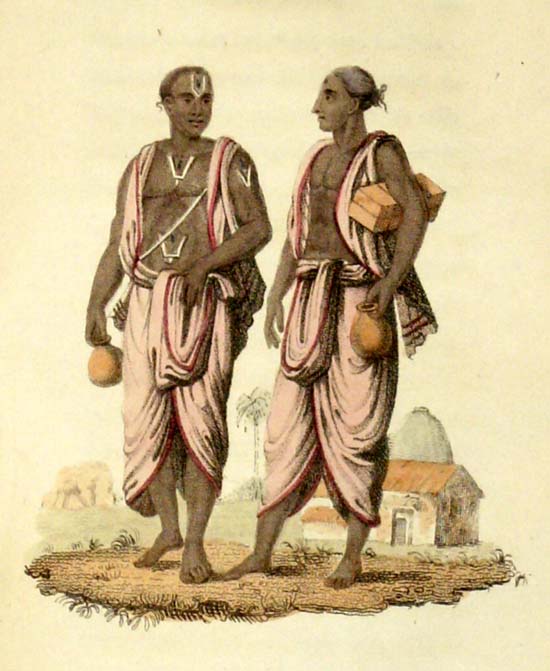
image: Brahmins. Columbia.edu

11 November 2011

Origin of the Idea of the Soul


IN MAY 2011 I EXPLORED the idea of afterlife, and précised some explanations for the ubiquity of beliefs in life after death. In June I outlined a taxonomy of afterlife beliefs, showing that most are variations on two themes, and stem from the same kinds of observations. In this post I want to look at an explanation put forward by Thomas Metzinger for the origin of belief in a soul - i.e. some conscious aspect of 'us' that is not tied to the body. [1] Obviously this subject is closely allied with the theme of life after death since in order to have post-mortem survival some part of us must survive the death of the body.


Those familiar with Metzinger will know that he has had a number of out-of-body experiences (OBE). In his paper he outlines the phenomenology, psychology and neural correlates of OBEs. He attempts to understand these from his own representationalist point of view. Metzinger's view is that the phenomenon of selfhood—the sense of being a self with first person perspective and agency—is related to a sophisticated self-model sustained in the brain. Reality is modelled by our brains in such a way that we do not know we are interacting with the model, except in exceptional circumstances such as brain injury which disrupts the model. Our 'self' is part of the model related to monitoring our own responses to the reality model. But again we experience our 'self' as real, not as a model. In his terms we are all naive realists with respect to our self-models. If one is not familiar with Metzinger's self-model I would recommend reading up on it, and not relying on my very brief summary which can hardly do it justice.[2]

OBE's are often associated with trauma—accidents, epileptic fits, brain injury—but some healthy people have them as well, sometimes in the waking state. They also occur in the dream state, or in the pre-waking state accompanied by sleep paralysis. OBEs are really a cluster of phenomena and that makes it hard to give a single representative example: but the common factors are that one sees oneself and one's surroundings, but feels oneself to be separate from one's physical body, or floating. In the OBE the locus of thought and identity is experienced as being outside the body, while the body and thoughts are still identified as 'mine'. This distinguishes it from phenomena such as depersonalisation and derealisation. Interestingly OBEs can also be artificially induced by direct brain stimulation, or using trans-cranial magnetic stimulation. The part of the brain concerned is the angular gyrus which is on the temporo-parietal junction - where the temporal and parietal lobes of the neo-cortex meet. Put simply if we pass a tiny electric current through the angular gyrus and there is an instantaneous out-of-body experience, switch it off and the OBE ceases.

Metzinger interprets the phenomena of OBE in terms of simultaneous but integrated self models. The first self-model is rooted in bodily sensations: muscle tension, inner ear balance information, the sense of touch etc. The second is primarily visual. Normally these two streams of information are integrated into a single self-model, but in the OBE for whatever reason the result is two self-models. The primary self-model, the one which the subject identifies with as the locus of their ego, is the felt sense of the body, though typically without the sense of weight from gravity which leaves the person with a floating sensation. The visual self-model is functional but not integrated with the felt sense allowing the sense that the subject is not "in" their body. In the OBE the subject will experience themselves as located in an ethereal body rather than as disembodied. Sometimes one simply floats, but frequently one has more or less agency and can decide to move about. This used to be called "astral travelling".

Metzinger describes his own OBEs in his book The Ego Tunnel: The Science of the Mind and the Myth of the Self. He does not doubt the phenomenological accounts of OBE, however he seeks to explain the OBE from his representionalist point of view, which is based on the observations of neuroscience. Metzinger is particularly interested in disorders like phantom limb syndrome, but also in ways in which the brain decides what is part of it's body and what isn't. For instance in virtual reality experiments subjects can have virtual OBEs where they experience a virtual body projected as separate from them physically in space as their own body. Alok Jha, science journalist, likened this to the movie Avatar where people 'inhabited' specially grown alien bodies. Our sense of being embodied, in our own physical body, is a simulation and it can be disrupted in many ways. If it were not a simulation then explaining phantom limb syndrome or the rubber hand illusion would be very difficult to explain.

The main phenomena the subject in an OBE will experience is that their thought processes are taking place separately from their physical body. Metzinger speculates that OBEs might be good candidate experiences for the origin of ideas about the soul. As he says:
For anyone who actually had [an OBE] it is almost impossible not to become an ontological dualist afterwards. In all their realism, cognitive clarity and general coherence, these phenomenal experiences almost inevitably lead the experiencing subject to conclude that conscious experience can, as a matter of fact, take place independently of the brain and body. (p.78)
We are all what Metzinger calls 'folk phenomenologists'—we all interpret our own experiences. On the whole we clearly do a good job of this. But when we have unusual experiences such as hallucinations, sleep paralysis, OBE, or even meditative experiences, we tend not to do such a good job. Although Metzinger does not say so, we are powerfully conditioned by a number of other factors which reinforce the ontological dualism. Here our predisposition to believe in life after death comes to the fore. This in turn is reinforced by our strong Theory of Mind: our ability to project consciousness not only into other humans, but into animals, trees, and even inanimate objects. The Theory of Mind is fundamental to our humanity, without it we would be incapable of empathy or relating to other people. But we are apt to see consciousness, and conscious agency where there is none. Particularly in the dead. If we combine this with an OBE or some other kind of experience which shifts the apparent locus of thought out of the body, such as a lucid dream, then ontological dualism might seem incontrovertible. Clearly some form of dualism is present in almost every afterlife belief, including Buddhist rebirth. It's impossible to posit post-mortem survival (let alone post-mortem memory) without implying, however subtly, an entity which survives separate from the body.

It's important to note that Metzinger is making conjectures here. He is taking the evidence and putting together plausible narratives to account for them. His representationalist explanation of consciousness is highly plausible, and appears to be a useful way of thinking about consciousness and especially self-consciousness. It is powerfully demystifying and disenchanting. It emerges from trying to explain observations from neuroscience, particularly the way the sense of self breaks down. These observations are intriguing, but more work must, and is, being done. And this is crucial difference between science and religion - in science we rigorously test theories hoping to prove them wrong (which is how a scientist gains kudos!)

If Metzinger is right, and I think his suggestion is entirely plausible, then we can see that this idea of being able to separate mind and body feeds into the powerful complex of ideas about post-mortem survival. The belief in an afterlife no longer seems so strange or strained. It's not only a psychological fantasy, but emerges to some extent from our experience of the world - or at least the experience of some of us. Afterlife beliefs are extremely persistent in the face of scientific rationalism, and my exploration of such beliefs has, to some extent, shown why they might seem plausible and preferable to the alternative. Metzinger remarks that trying to destroy a person's deeply held belief in the afterlife has ethical implications. In attempting to undermine a person's belief system we may be doing them a violence. It's all very well to debate the facts such as they are, but as self-aware beings we have an obligation to try to relate to people first and foremost on the basis of empathy. We may simply have to acknowledge that some people will be eternalists no matter what facts we present, because our version of the facts seem implausible compared with the alternative. I don't think this is a problem as long as what they believe is not causing them to be unkind or prevents them from relating on the basis of empathy.


~~oOo~~


Notes
  1. Metzinger, Thomas (2005) 'Out-of-Body Experiences as the Origin of the Concept of a "Soul".' Mind & Matter Vol. 3(1), pp. 57–84. http://www.philosophie.uni-mainz.de/metzinger/publikationen/OBE_M&M_2005.pdf
  2. Fortunately Metzinger himself has provided an introduction: Scholarpedia. Self models. See also his book: The Ego Tunnel: The Science of the Mind and the Myth of the Self. I précised Metzinger's lecture on the first person perspective in April 2011. I would also recommend reading Antonio Damasio's book: The Feeling Of What Happens: Body, Emotion and the Making of Consciousness which gives an account of how self-consciousness might emerge from modelling body states in the brain.

See also

04 November 2011

Emotions in Buddhism

Emotions
IN A LENGTHY WRITTEN exchange with a colleague on the subject of citta it became clear that there is something unusual about the way early Buddhism treats emotion. To begin with there is no word in Pāli or Sanskrit for "emotions" as a separate category of experience. On the other hand there are words for distinct emotions such as fear (bhaya), anger (koda, rosa), hatred (dosa), joy (ānanda, pamojja), sadness (domanassa, soka) and so on. So emotions are concepts in themselves, but do not form a natural category different from other kinds of experiences. However the received tradition is that ancient Indians treat emotions under the heading of 'mind'. Alongside this we frequently find the suggestion that citta ought to be translated as 'heart'. I want to look again at this.

When I wrote about citta back in March 2011 (Mind Words) I bent my definition to include emotions. I am not so sure now. To recapitulate: citta comes from the root √cit which I defined thus: "√cit concerns what catches and holds our attention on the one hand, and what we move towards [or away from] on the other." My colleague had consulted Margaret Cone, the Pāli Lexicographer and author of the new Dictionary of Pali, about her dictionary definition and she replied that citta means 'thinking, thought, intention'; with no mention of emotion. This raised the concern that emotions were being "left out", which is quite an interesting proposition. Are emotions being left out here?

On reflection I decided that emotions are not being left out, but they are being defined differently from how we define emotions. From the early Buddhist point of view experience has a bodily component (kāyika) and a mental component (cetasika). This much is clear from the Salla Sutta (SN 36.6, PTS S iv.207), which makes a distinction between bodily pain, and mental suffering: the arahant has the former, but not the latter. [1] Now, we know that emotions too have a felt bodily component, and hence we often use 'feeling/feelings' to talk about or describe emotions: "I feel happy", "how are you feeling" etc. And we know that emotions have a mental component and that this mental component is what distinguishes emotions from other types of bodily sensation (i.e. proprioception, the normal operation of the viscera, or physical touch).

Likewise from the point of view of physiology emotions are indistinguishable from each other. Cordelia Fine summarises some the research on this in her entertaining little book A Mind of Its Own. She points out, for instance, that the mechanism that makes our heart race with fear, exhilaration or plain physical exertion is the same in each case. The body has very limited responses to stimulation. Fine sums it up with this equation:

emotion = arousal + emotional thoughts.

Arousal, it turns out, comes in one flavour but differing intensities. Arousal simply prepares the body for activity. If you are shaking fear, or anger, or trembling with anticipation of reward it's all just arousal. And what makes the experience distinct is the accompanying thoughts.[2]

Now this view of emotion is quite consistent with the early Buddhist model which seems to see emotions as agitation accompanied by thoughts. The Pāli word for empathy is anukampa: literally 'to tremble along with' i.e. to feel what someone else feels. In the Mahāmaṅgala Sutta we find that one aspect of the highest blessing is:
Phuṭṭhassa lokadhammehi, cittaṃ yassa na kampati;
Touched by objects of experience, his mind is not agitated. (Sn 47)
Considering lokadhamma recall that loka is our experiential world, and a dhamma is the object of manas, hence my translation as 'objects of experience'. So what usually happens when we have an experience is agitation (kampati) of our mind (citta). Interestingly when the word emotion first entered the English language from French in the 16th century it meant 'agitation'. So what has changed?

I think what changed was first the 18th century European Enlightenment, followed by the Romantic reaction against it, which itself found expression in the Psychoanalytic movement. I think this partly because I've read David McMahan's book The Making of Buddhist Modernism and agree that these are some of the main influences on the modern world generally, and have deeply influenced the presentation of Buddhism around the world since the 19th century. McMahan includes Protestantism as well, but we can leave that aside for now.

Partly due to Enlightenment propaganda we see the period before the emergence of science as one of rampant irrationality and superstition. (Though this was countered in the popular imagination by the Romantic idea of the "noble savage", and in fact superstition and irrationality are still rampant!) Enlightenment thinkers began to apply objectivity and reason to many problems, and discovered they could solve many of them. Whatever else we say about Newton, Locke, Hook & co. we must acknowledge their great achievements. So great was their success that they and their successors began to see reason as superior to emotion. To them the universe seemed like a giant clockwork machine that they could take apart and fully understand. To be fair this notion was not new to them, but was originally a product of theological thinking about 'the music of the spheres' and the 'great chain of being' which had been around for centuries. Enlightenment thinkers were consciously disenchanting the world, and felt more free as they did so: free from the irrational leadership of the Church which feared reason and knowledge, and free from the small fears which ruled every day life. Soon they began to be free of the fear of diseases like Smallpox as well. And free from some of the uncertainty of life. We enjoy these freedoms largely without acknowledgement these days, and with apparent resentment amongst many Buddhists (who seem to hate scientists, perhaps because they have been so successful?).

However the disenchantment cultivated by Enlightenment figures left some people feeling that such a mechanical universe was lacking something. In England especially poets began to celebrate the mystery of the cosmos, and especially to revel in the unreasoning and irrationality of flights of emotion. They sought to topple reason from the pinnacle of human endeavour and replace it with emotion. The Romantics indulged in all kinds of emotions, and produced art, literature and music designed to stimulate strong emotions - everything from love to horror. And they took all kinds of mind altering substances for the intense experiences they produced. They did not let society tell them how to live - the heroic individual and their emotional life ruled. For Romantics the exotic and mysterious provoked the kinds of emotions they enjoyed, so they cultivated an interest in them - the intellectual was seen as dull and lifeless. They also worshipped nature and valued the natural world, or at least an idealised notion of it. In many ways the morality 1960s was simply a late flowering of a seed planted by the 18th and 19th century Romantics (and just as misguided). This focus on emotion seems to underlie the idea that emotions are a particular category of human experience, and one of very high value.

In some ways we can see the Psycho-analytical movement as an attempt to reconcile these two rather monstrous cultural forces. Freud certainly saw himself as a scientist, and his subject of study was the emotional life of the patient. History has shown that Freud, while a gifted observer and writer, was no scientist. Only recently are neuroscientists starting to put psychology on a proper scientific footing. But Freud and his successors have profoundly influenced the way we view emotions. Emotions are hypostasized and become a special category of experience, distinct from thoughts and simple body sensations. Thoughts convey reason, while emotions are an expression of our mysterious 'soul' or 'spirit', a Romantic expression of our true nature. If we are to understand ourselves, the Psychologists tell us, then we must understand our inner emotional life; we must delve into the sources of our emotional reactions. It is because of the Romantics and Freud that we believe that an unexpressed emotion represents a danger to our well-being. As William Blake said:
Sooner murder an infant in its cradle than nurse unacted desires.
This is very far from either the early Buddhist view, or the emerging consensus from neuroscience. Buddhists texts are constantly telling us to use reason to keep our emotions in check. We are to avoid stimulating agitation by withdrawing our attention from sensory stimulation. This aspect of Buddhism is notably unpopular in Romantic Western Buddhism. We cannot bring ourselves to believe that saṃsāra is all bad. We just want to enjoy ourselves a little: by which we seem to mean to stimulate the emotions: be it joy, or horror. Unfortunately for us Western Buddhism is mainly lead by people from the Baby Boomer generation, and from that part of it which saw the Hippy movement, with its Romantic hedonism, self-absorption, self-indulgence, and intoxication, as a good thing. Renunciation is anathema to the Romantic.

In conclusion early Buddhism had a very different view of emotions than the view current in the Western World. Emotions were not a distinct category of experience, though I would argue that most of what we call emotion these days does fit into the broad category of papañca (though even the definition leans towards the mental rather than physical). Therefore the Buddha has no position on emotion, and emotions as a category play no part in his methods. Yes, we cultivate metta, but note that in the locus classicus, the Karaṇīyametta Sutta it is the mind (mānaso) that includes all beings, not the heart. Yes, we cultivate pamojja; and yes we suppress anger. But there is no theory of emotions as a distinct type of experience. At best emotions simply agitate us, and can be divided into those that fool us into craving, and those that fool us into aversion.

We Buddhists have long had critiques of materialism. We understand to some extent the influence of Scientific Rationalism. We also have some understanding of the influence of Protestantism. But we seem to have almost no notion that we are influenced by the Romantic movement, or by the German philosophical counterpart Idealism. Most Buddhists get interested in Psychology to some extent since it seems to related to what we do, but we have no sense that it channels Romanticism. There is no traditional critique of Romanticism perhaps because it wasn't a traditional view, whereas some form of materialism always was. Western Buddhists (and I may say the Triratna Order in particular) desperately need to develop a critique of Romanticism because it is such a powerful influence on how we see ourselves and the world, and its unchallenged assumptions impede our progress in the Dharma. This is not to say that we should reject Romanticism out of hand, only that we should be aware of the history of these ideas and how they influence our worldview.

~~oOo~~

Notes
  1. The kāyika/cetasika distinction occurs in other places as well, e.g. M i.302, iii.288-90; S iv.209, iv.231; v.111; A i.81, i.137, ii.143.
  2. That these different kinds of thoughts are handled by different brain structures using different neurotransmitters doesn't change the facts of the physical manifestation in the rest of the body produced by the sympathetic nervous system and a narrow range of hormones.

Further Reading:

28 October 2011

Having your Cake and Eating it.

THE IDIOMATIC PROVERB in my title today is one of the strangest in the language I think. It refers to someone who wants everything. The basic idea is that having eaten your cake you no longer have any cake. So you can either have cake, or you can eat cake, but not both. I think Western Buddhists want to both eat their cake, and to have it. We often want both a full conventional life and liberation: to fully participate, and feel comfortable in saṃsāra; and escape from it. We might have a career, a family, a hobby: the "full catastrophe" as Zorba the Greek says. [1] We go to films, listen to music, and surf the Internet. And yes, we eat cake! And we might squeeze in one session of meditation a day around our busy schedule. An hour if we are lucky. And we want to be told that this is OK; that it is sufficient, that liberation is a possibility under these conditions. I've seen people become visibly upset at the mere hint that this is insufficient. But it is insufficient. Though that doesn't make you (or me) a bad person!

By contrast I have a friend who does building work for a couple of months each summer, and uses the proceeds to spend four months on solitary retreat every year, and has done for 12 years. Another colleague is on an open ended retreat that has so far lasted 3 years. Tibetan Buddhist clergy routinely do three year retreats, and have developed facilities for just this purpose. Now if I had to guess at where liberation was likely to occur I would have to say that it would be amongst this second group - the serious practitioners who arrange there life around their practice and not the other way around.

We need to be realistic. There's no shame in leading a lifestyle that is reasonably ethical and wholesome, but which lacks the intensity of practice that might be conducive to liberation. That kind of lifestyle is admirable in many ways, and preferable to an unexamined, hedonistic or vicious life. But it is not realistic to think that a lifestyle which is not conducive to liberation might by a fluke allow us to be liberated. It's pretty unlikely. Liberation seldom spontaneously arises in someone. We may have an insight which turns us around, makes us rearrange our lives, and reorder our priorities, as often happens for instance when a loved one dies; but this kind of spontaneous insight requires nurturing and cultivating if it is to bear fruit. And in a busy life it will be lost quite quickly. It's down to setting up the right conditions.

I was recently leading some study with my Order peers and pointing out that in texts which feature the spiral path or lokuttara paṭicca-samuppāda [2] the stage of ethics is characterised not by following rules and precepts, but by guarding the gates of the senses (indriyesu guttadvāra), wise attention (yoniso manasikāra), non-intoxication with sense objects (appamāda), and restraint (saṃvara). I suggested that this was a far more demanding approach to ethics than we normally take on. These models effectively suggest that we approach ethics as a trial run for the wisdom stages of the path: i.e. disenchantment (nibbidā) and turning away (virāga) which are the conditions for liberation (vimutti). Morality in this case is acting as if we are disenchanted with the delights of the senses, and a deliberate, even mechanical, turning away from them. The texts suggest that the results of these practices are a clear conscience (avippaṭisāra), faith (saddhā) and importantly joy (pamojja). Ayya Khema has said that joy is an essential quality for meditation. With joy we are ready to begin training in and becoming skilled in the jhānas which prepare the mind for seeing through (vipassanā [3]) the delights of the senses.

All this is demanding and to be successful requires considerable persistence and effort, because it goes against our natural inclinations. Frankly, it isn't really consistent with how most of us live or want to live. Therefore it is hardly any surprise that so few of us are confident in jhāna, able to enter jhāna at will, and move easily between the levels. I know people who are, but they are the ones I mentioned above who organise their lives around their meditation practice and dedicate long hours to practice. Of course developing familiarity with jhāna is only a preparation for vipassanā practices. Jhāna can help loosen the grip that intoxication with sense pleasures has on us, but other practices—reflections on the nidānas, on impermanence etc.—are, according to tradition, what set us free of that intoxication permanently.

I'm more focussed on study, on learning and reading Pāli, and on trying to understand Buddhist doctrines and the history of Buddhist ideas. My life, while not given over to vice, is not directed towards prolonged and intense meditation. But I make my contribution to a community of practitioners and help to create the conditions for bodhi to arise in someone; mostly like someone else. And after all it need not be me. Serious meditators do need a support system. As long as I help to set up supportive conditions for those who can make use of them, I feel I'm making a valuable contribution. My colleagues seem to confirm the usefulness of my work, so that's a relief!

We have different temperaments and can't all practice with equal intensity. And many of us come to the Dharma already encumbered with serious responsibilities. We can't both have our cake and eat it. I suggest that we need to think in terms of serving - making cake if you like. Not only serving something greater than ourselves (in my case the Triratna Order) but serving those members of our community who will benefit the most from our support. This in turn, unlike in the financial economy, has a trickle down effect and benefits the entire community, and we might say the entire world (if that is not too grandiose).

~~oOo~~

Notes
  1. The full quote seems to be "Am I not a man? And is not a man stupid? I’m a man. So I married. Wife, children, house, everything. The full catastrophe." The source is less certain and it may be from the movie Zorba the Greek directed by Mihalis Kakogiannis, rather than the novel Life and Politics of Alexis Zorepa written by Nikos Kazantzakis; though Kazantzakis contributed to the movie screenplay as well. Note that this original version of the idea lacks the kind of positive spin given to it by John Kabat Zin.
  2. My comprehensive list of such texts and examination of them, along with diagrams showing the various links and nodes is here: http://www.jayarava.org/dependent-arising.html
  3. Although we usually translate vipassanā as 'insight' in many ways this is a poor choice. The vi- in vipassanā does not indicate seeing inwards, but seeing through, and seeing through is closer to what we are trying to achieve. As I've said before Buddhism is not necessarily about looking inwards, not just navel gazing. Here the vi- is cognate with the Latin 'dia-' as in diaphanous which literally means 'appearing through'. A Latin translation of vipassanā might be diavisionem. We might call a moment of vipassanā a 'diaphany', on the model of epiphany.

21 October 2011

The Post-Abhidharma Doctrine Disaster.

I WAS COMMENTING ON a discussion on Google+ regarding an article by B Alan Wallace recently when something crystallized out in my thinking about the history of Buddhist ideas. One of my long term interests is the way the definitions of dhammas evolved. Early on it seems reasonably clear that dhammas are seen as aspects of experience that have no ontological status. For this reason the Kaccānagotta Sutta can say that atthi (it exists) and n'atthi (it does not exist) do not apply to the world of experience. As Eviatar Schulman has pointed out, this does not mean that early Buddhist doctrines have no metaphysical implications. [1] But these implications did not seem to interest the authors of the suttas; which leads us to presume didn't they interest the Buddha either. However as attempts to systematise the teachings proceeded it seems that metaphysical implications became more and more interesting. Noa Ronkin has argued that it is overstating the case to say that the Abhidharmikas introduced ontology into Buddhism, but they certain were interested in ontology in a way that the authors of the suttas were not.[2] And this opened up Buddhism to metaphysical speculation. One of the problems that Buddhists created for themselves relates to bodhi.

The problem seems to be that Buddhists sidelined dependent arising as the mechanism by which one experienced bodhi. They did this by:
a.) reifying conditioned dhammas;
b.) deifying unconditioned dhammas (i.e. bodhi);
c.) forgetting that dependent arising has a lokuttara aspect. (See e.g. A XI.1-5, Nettipakaraṇa, 65).
The combined effect was that dependent arising could no longer account for bodhi. Dependent arising is relegated to describing how saṃsāra works, with a focus on the material world. There is a sense of this in Buddhaghosa's Visuddhimagga when he mentions the lokuttara-paṭiccasamuppāda only in passing and, as fa as I can tell, seems to regard it as relating to saṃsāra rather than nibbāna. Similarly Nettipakaraṇa defines the twelve nidāna sequence as lokiya 'worldly'.

Bodhi, according to the post-Abhidharma traditions, is somewhat like the Christian idea of grace. Grace is a quality that Yahweh gives out at his whim, and one cannot earn it through any amount of piety and good works. Similarly most Buddhists seem to believe that one cannot cultivate or pursue bodhi, one must just meditate and hope for the best. I always meet resistance when I use the phrase "cultivating insight" on my blog! "Insight", I am solemnly informed, "is not something that can be cultivated." Which I do not believe for a second.

The vinaya provides sanctions for anyone who is not an arahant claiming to be one. These days any kind of claim to spiritual attainment is seen with suspicion. And this particular attitude combined with the vagueness about how bodhi might happen have created a strange situation in Buddhism. People do claim to be arahants in this day and age. I've mentioned Daniel Ingram, who openly calls himself an arahant, to a few people and the attitude seems to mainly be one of indifference. Which is surprising in some ways. If someone has achieved what we have strived for years and decades to achieve then shouldn't we be at least curious? But I gather that most people secretly believe it is not possible, or they are not interested because he is the wrong kind of Buddhist.

The side-lining of dependent arising meant inventing new ideas to account for bodhi, prominent amongst which was tathāgatagarbha. Tathāgatagarbha appears to adapt the Vedantic idea of the ātman (and some Mahāyāna sūtras explicitly equate tathāgatagarbha with ātman). This idea is that in each of us is a spark or mote of bodhi, which we have covered in defilements. This mote has all the characteristics of ātman. If you read about ātman in the Upaniṣads instead of Buddhist anti-Hindu propaganda, you will see just what I mean.

With the advantage of hindsight we can see what a disaster the whole Abhidharma project was, and how it created huge down stream philosophical problems (including the one under discussion). Really we should be thinking in terms of letting the house of cards fall down and rebuilding from scratch.

I don't know as much about Nāgarjuna as I ought. But I see him as an interesting figure, not for the usual reasons, but because he cited a Sanskrit version of the Kaccānagotta Sutta (KS) in his Mūlamadhyama-kakārikā (MMK). David Kalupahana has made much of this single citation - the only text cited by name in fact. He sees MMK as a grand commentary on the KS. [3] While I think this is plausible, I don't think it's the only way to see the relationship. I think the KS reflects a particular attitude to the teachings which I have been calling the "hermeneutic of experience". With the hermeneutic of experience we seek to interpret doctrines as though they are always talking about experience, rather than metaphysics (enquiry into 'being') or ontology (enquiry into 'what is'). I'm told this is similar, but not identical, to the methods of phenomenology. I think Nāgarjuna might have been employing a hermeneutic of experience, which lead him to resist the Abhidharmika interest in metaphysics. But Nāgarjuna had a problem: traditionally Buddhists could not backtrack. Though he disagreed with the Abhidharmika metaphysics, he could not simply set them aside, and perhaps it did not even occur to him. The Abhidharma was already canonical by that stage. So he came up with a way to get back to experience, and deal with ontological speculation by introducing the idea of svabhāva śūnyatā, and it's corollary the so-called "two truths". Though this was a brilliant solution to his dilemma I wonder if we could actually do better. I've already tried to demonstrate that the two truths are in fact superfluous if we do not make erroneous assumptions about where pratītya-samutpāda applies, i.e. if we apply the hermeneutic of experience, and do not reify conditioned dharmas. [4] If we ditch the abhidharmika metaphysics of dharmas, then the idea of svabhāva śūnyatā is also superfluous because it is already explicit in the KS.

This is not to say that good ideas and practices have not come out of the post-Abhidharma doctrine debacle. Straying into metaphysics required some creative correctives such as Nāgarjuna introduced. But the result is messy and confused. Doctrinal wrangling is such a prominent, even dominant, feature of Buddhism! We cannot decide what our own teachings mean, or if we do 'know' then we invariably seem to be dogmatic about it and often ignorant of alternatives. Since I adopted the hermeneutic of experience I have found that many of the paradoxes and polarisations that surround Buddhist doctrine have melted away, and this is partly why I think it is so useful! There is much less to argue about.

The irony is that the methods continue to be effective despite our messed up views. So there is another argument which says that it doesn't matter that much what you believe, and it is certainly not necessary to have big doctrinal arguments (unless you like that kind of thing). If what we believe motivates us to practice, and by practice I mean the full range of Buddhist practices, then the practices themselves tend to sort out our views, eventually. So in fact doctrine is of relatively minor importance compared with practice.

~~oOo~~

Notes
  1. Shulman, Eviatar. (2008) 'Early Meanings of Dependent-Origination.' Journal of Indian Philosophy. 36:297-317.
  2. Ronkin, Noa. (2005) Early Buddhist Metaphysics. Routledge.
  3. Kalupahana, David J. (1986) Nāgārjuna: The Philosophy of the Middle Way. State University of New York Press.
  4. Jayarava. (2011) 'Not Two Truths.' Jayarava's Raves. http://jayarava.blogspot.com/2011/08/not-two-truths.html

14 October 2011

Sound, Word, Reality

Sound Word RealityKŪKAI'S 声字実相義 (Shōji jissō gi) [1] is one of a trilogy of texts that set out to both answer his critics and to instruct his students. Each of the three texts is rather dense, and fairly esoteric in itself. I have been working through a commentary on this work for a book I am editing which reprints Professor Thomas Kasulis's article: ‘Reference and Symbol in Plato’s Cratylus and Kūkai’s Shōjijissōgi’ [2] alongside translations of the two dialogues and some introductory essays.

In his text Kūkai develops a way of interpreting mantra, a hermeneutic, which relies on different syntactical analyses of the combination word: Shō-ji-jissō 'sound, word, reality'. He analyses the Chinese as though it were a Sanskrit compound to demonstrate that we can construe the relationships in various ways, some more profound than others. This is a novel approach, but where does this principle of sound, word, reality come from?

In this exegesis Kūkai makes use of some lines extracted from chapter two of the Mahāvairocana Abhisaṃbodhi Tantra:
The perfectly Enlightened One's mantras
Are made up of syllables, names, or clauses;
Like the statements made by Indra,
They are meaningful and effective.[3]
In the verse ‘the perfectly enlightened one’ stands for the Body Mystery of the Dharmakāya and corresponds to reality; “mantras” make up the sounds that constitute the Speech Mystery; while the “syllables” and “names” correspond to word. Note that he does not equate these with the Mind Mystery. So the verse itself demonstrates the principle in action. Kūkai believes that there are hierarchies of being, or layers to reality, and that by paying careful attention to our mundane level of perception that we can get insights into higher levels because not only is each phenomena interpenetrated by all the others, but the levels of being or perception also interpenetrate each other. As in Indra’s net an insight at one level provides access to all levels. To reinforce this Kūkai shows that the principle holds good for the Mahāvairocana Sūtra as a whole, and even for the single syllable ‘a’.

The 'power' of a mantra, then, is related to its associative relationships with aspects of experience. This ties into a tradition which goes back to the early days of the Mahāyāna in Gandhāra – in the north-west of what is Pakistan (including the towns of Peshawar and Taxila, and the Swat Valley). There we find, in texts and sculptures, the local alphabet being used a mnemonic. For many years the sequence of alphabet, still not fully explained, lead people to think that it was invented or ‘mystical’. But Professor Richard Salomon, in three published articles, has shown that the alphabet is that of the local language, now called Gāndhārī, though Buddhists often still refer to it as the Arapacana Alphabet or the Wisdom Alphabet. This alphabet was written in the Kharoṣṭhī script which was most likely modelled on the form of Aramaic writing used by the Achaemanid Persian who administered that area for a time. Kharoṣṭhī, like Semitic and Tibetan scripts, has only one vowel sign which is modified by diacritics to indicate different vowels. The unadorned sign is ‘a’. Like other Indic scripts each written syllable has an implicit ‘a’ vowel unless accompanied by diacritics.

The mnemonic use of the alphabet seems to be closely associated with meditation practices in prajñāpāramitā texts, particularly the larger 18,000, 25,000, and 100,000 line versions. The first five letter of the Gāndhārī alphabet – a ra pa ca na – came to be associated with the wisdom deity Mañjuśrī (his mantra is oṃ a ra pa ca na dhīḥ) and with the Prajñāpāramitā tradition generally. This tradition pervades the Mahāvairocana Abhisaṃbodhi Tantra. In some Buddhist texts, e.g. the Lalitavistara Sūtra, the original Gāndhārī alphabet is substituted for the Sanskrit alphabet. Curiously the MAT has a kind of hybrid – the consonants are from Sanskrit, but in most cases they are only accompanied by a single vowel as in Kharoṣṭhī.

Each letter in the alphabet was made to stand for a word, and each word was the focus of a reflection on śūnyatā. So for example 'a' stands for the Sanskrit word anutpāda ‘non-arisen’. The reflection was akāro mukhaḥ sarvadharmāṇāṃ ādyanutpannatvāt "The syllable 'a' is a door because of the non-arisen-ness of all dharmas." This is pointing to the idea that dharmas, as the objects of the mind, are neither existent nor non-existent - when we have an experience, nothing substantial comes into being. There is no doubt that we have experiences, and objects present themselves to our minds, but the ontological status of the experience itself is indeterminate. The original insight of Buddhism was that mistaking experience for something substantial, and treating it as something which could be held on to was the cause of suffering. Hence reflecting on the contingent, impermanent, and unsatisfactory nature of experience was one of the prime methods of accessing the insights that freed one from suffering. These reflections clearly continue that original Buddhist tradition.

In Tantric texts the syllable is not simply a sign for the verbal sound, but has become a fully fledged symbol of the aspect of reality indicated by the word it signifies. This symbolic function is in the foreground in Tantra to the point where merely visualising the written form of a letter is seen as putting one in touch with the quality it represents. This finds its apotheosis in the meditation on the syllable 'a' – where one simply visualises the letter, usually written in the Siddhaṃ script, and by such close association one becomes imbued with the wisdom which sees dharmas – mental phenomena – as the really are.

The correspondence between the sound of the letter, the word it reminds us of, and the reality it points to in the example above is seen by Kūkai as a special case of a general principle. But the point is that here we have sound, and word and reality.

soundshōa
wordjianutpāda不生
realityjissōsarva-dharmāṇāṃ ādy-anutpannatvāt阿字門,一切法 初不生故 [4]

Although it is not entirely obvious from the translations and commentaries, I believe that this is the idea that underlies Kūkai's analysis of “sound, word, reality”. The sound /a/ stands for the word 'non-arising' (anutpāda), i.e. not coming into being; and this reminds us that 'all dharmas have the primal quality of not having come into being'. That is to say that when we perceive a dharma we do have an experience, but though we have an experience nothing permanent, satisfying or substantial comes into being. In Mahāyāna terms the experience is empty of intrinsic being (svabhāva śūnyatā).

Of course finding a correlation is not the same as finding a cause; and finding a precedent is not the same as showing a genetic relationship. However I think this explanation is a plausible account of the origins of the sound, word, reality.

~~oOo~~

Notes

  1. There are two complete translations of this text into English: Hakeda, Y. (1972) Major Works, p.234-245; and Giebel, R. (2004) Shingon Texts, p.83-103. The text is also partially translated and discussed in detail Abe, R. (1999) The Weaving of Mantra, (esp p. 278ff.) though his reading is one which relies heavily on contemporary Semiotics jargon, which I struggle to make sense of.
  2. Philosophy East and West, 1982.
  3. Hodge, Stephen. (2003) The Mahāvairocana Abhisaṃbodhi Tantra. Routledge, p. 129. Hodge translates from the Tibetan. The Tibetan text replaces the line about Indra with ‘by mastery of the words’. The Chinese reference is Taisho 18.850, 83a22-a23. The Chinese text is:
    等正覺真言 - Děng zhèng jué zhēnyán
    言名成立相 - Yán míng chénglì xiāng
    如因陀羅宗 - Rú yīn tuó luó zōng
    諸義利成就 - Zhū yìlì chéngjiù
  4. Chinese text from Kumārajīva's translation of the Pañcaviṃśatisāhasrikā Prajñāpāramitā Sūtra (T.223).

07 October 2011

Conjecture and Refutation

Karl Popper"Everything we've learned... is just a theory, and it might well be wrong... the greatest thrill of all would be to prove something wrong." Dr Kathy Romer, Astrophysicist. [1]

THERE IS A CONVERSATION I seem to have again and again when talking with Buddhists. It's about what science is, and how scientists employ the scientific method. Given that we all study science at secondary school, how is it that so few people seem to understand the role of scientists or the process of advancing scientific knowledge? Given the central importance of the applications of science in the modern world, can we afford to be so ignorant?

I have a little confession to make first. I've never read Karl Popper's books on the scientific method. And I never heard of him while studying science at school or university. I read of Popper only as an adult. Particularly in the book "Wittgenstein's Poker", but also in books and lectures by Richard Gombrich whose father was a personal friend of Popper. The young Richard proof read the seminal work Conjectures and Refutations, and it obviously had a powerful effect on him.

Popper is probably the most important figure in the philosophy of science to date. It was he who definitively described what science is and is not, and I want to review my understanding, in the hope that others will appreciate science better, but also so I can point to this essay in inevitable future arguments.

Although I've just been using science as a proper noun, I want first of all to make the point that science is not an entity. We say things like "science says..." or "science does..."; but science in this sense simply doesn't exist. There is no distinct agent or entity which we can name. There is no doubt a body of evolving knowledge. There is a community (or even one might say an ecosystem) of people employing the scientific method of conjecture and refutation (with it's parasites known as science journalists whose method is more like rejecture and confutation). But there is no entity present in all of this - this is a point Buddhists, of all people, ought to be able to appreciate. Science is anātman, asvabhāva, śūnya. At best "science" is a place holder for the body of knowledge and practice, and the community of practitioners. It's very like Buddhism in this sense - there is no single entity or agent identifiable with Buddhism, and finding something we all have in common is difficult; and that commonality exists only on the most general level. As soon as we begin to specify what makes a Buddhist, then Buddhism begins to splinter.

A scientist is anyone who practices the methods of science. All scholars who advance knowledge follow a process of conjecture and refutation. I put forward a conjecture and my grounds for doing so, and I ask my peers to refute it if they can. If it can be refuted then I drop it, and move on to the next conjecture. Science applies this method to the phenomenal world (rather than, say, to literature or history). Religion on the other hand begins with the Truth, and asks us to change our minds until we completely agree with the Truth. No challenge to the Truth is possible, since it is True. Certain strands of religious Buddhism are like this also, and in that sense very far removed from science. Religion also often posits a noumenal world, by which I mean knowledge not related to phenomena. This is an oxymoron in Buddhism, but it has an on going appeal across the spectrum of Buddhism for some reason.

Within the conjecture/refutation procedure the scientist practices by observing phenomena; creating falsifiable predictive hypotheses about the world; testing their predictions; and through peer review and publication inviting others to test their theory. Although we retain the Enlightenment/Victorian Era language of Laws of Physics, scientists know full well that a theory tested to the limits of human ability is still not proved. It was Popper who in the first half of the 20th century began to formalise this, partly in reaction to Logical Positivists who claimed only verifiable knowledge was valid. The classic example is the notion that since all swans are observed to be white, then the statement "all swans are white" is held to be true. The first Europeans to return from Australia brought shocking news - downunder the swans are black. Black swans are a different species, but they are no doubt swans. Since Popper it's been explicit that any theory may be falsified. Mind you anyone familiar with the havoc wrecked on previous theories by Einstein's oeuvre could hardly feel confident about any view they hold about the physical world.

Now non-scientists maintain a number of anachronisms. They seem to think that scientists are stuck in the Victorian Era: trying to prove things, seeking immutable Laws, and believing the equivalent of "all swans are white". While I never studied Popper at school—more's the pity—it's clear that scientists are not stuck in the same Victorian time frame as non-scientists. In fact scientists are all working to disprove everything that we think we know. This is fundamentally what makes science different from religion. Yes, there are scientific "laws", yes there are powerful explanatory theories, but the dream of every scientist is to rewrite those laws, to over-turn those theories. No scientist worth the label is satisfied with the current state of knowledge, and each wants to find a 'black swan' (and have it named after them!).

So the scientist makes observations. Often today it is through complicated and expensive machinery. But not always. One of my scientific heroes is Jane Goodall who changed our paradigms with regards to chimps with a pair of binoculars and a notebook. Scientists pay close attention to phenomena and try to describe as accurately and dispassionately as possible what they perceive. Ideally they see something new, but it may be that they simply observe what has been observed before and see it in a new way. Any explanation they come up with—an hypothesis [2]—seeks to predict further observations suggesting that the explanation has grasped the underlying regularity of the phenomena. For example: if after observing a comet, I hypothesise that it is a small body in an elongated elliptical orbit, I can predict when I will see it again. If it does not appear when I predict then my theory is wrong. The fact that it does appear suggests that my theory is useful, not that it is True.

But science is not a private enterprise. It is public. So having observed, hypothesised, and tested I then submit my results for publishing. Scholarly publishing subjects all potential publications to peer-review. A group of a scientists peers will read the paper to try to ensure that at each stage the scientist has not made gross errors or leapt to false conclusions. As a trainee scientist I was constantly admonished not to go beyond my data - not to add to my observations from past experience, and especially not to try to make my conclusions fit my hypothesis. Of course this process is subject to problems. Publishing a book can circumvent peer-review, though books also get reviewed even if only after the fact. Scientists more and more seem to announce results to the press rather than their peers. One of the most infamous occurrences of this was the announcement by Pons and Fleischmann that they can observed nuclear fusion at room temperature (while others were seeking it at millions of degrees). Peer review panels are subject to human foibles: they are capable of blocking new ideas; individual animosity may intrude; and they also fail to prevent rubbish being printed. There is sometimes, especially in medical publishing, a bias to only publish the results of studies which support an idea, and to suppress those which do not (a variety of conformation bias). But on the whole the system works well.

There is a further step in the scientific method post-publication. For a result to be meaningful or useful, it needs to be repeatable. So a one off result is not worth much. Ideally three or four other scientists or groups of scientists will carry out the same experiment, with the aim of trying to disprove the result or find an alternative explanations, and they will also publish their results. Before a theory becomes accepted as generally useful at predicting future observations, it has to be thoroughly tested. And scientists like nothing more than proving their rivals wrong. The history of science is rife with competitiveness, often devolving in rancorous disputes. Of course these days no one can get funding for merely reproducing someone else's experiment, so what we get a series of overlapping results.

A problem for the lay person these days is irresponsible science journalism. Newspapers eager to increase circulation and sell advertising are not famous for their probity (and are often infamous for their lack of it). What the science journalist does is search for journal articles with sensational findings and write a simplified version of the paper for a general readership. Examples of this are legion. The MMR Vaccine controversy is a good case in point. A researcher with multiple conflicts of interest, publishes a single article suggesting a link between the vaccine and autism. Later he is found to have manipulated evidence and broken ethical codes, and not only is the paper retracted, but the author is struck off the Medical register. Meanwhile the newspaper article claiming that MMR vaccine causes autism has gone viral and many parents refuse to vaccine their kids, causing a minor epidemic of measles in the UK (which has not yet abated). [3] A similar story is the "cell-phones do/don't cause cancer" story that runs and runs, not because anything definitive is discovered, because things that cause/cure cancer sell newspapers.

So this is my view on what science is, and how knowledge proceeds. Knowledge is always provisional, though of course it may retain it's usefulness. I think lay people often throw the baby out with the bath water. They hear, for instance, that Einstein's theory of gravitation supersedes Newton's, and suppose that Newton's theory of gravity is redundant. But this is simply not true. If I were putting up a building and calculating stresses, or building a new aeroplane, or firing a rocket into space, I simply would not need to use Einsteinian mathematics, and to try to do so would simply hamper my efforts. I would use Newtonian mathematics. All measurements have a margin of error - and real science always gives margins of error when stating a measurement. The margins of error, though very much greater when using Newton's equations still amount to a few parts per billion in most of the applications I might be interested in. If accuracy of more than a few parts per billion is required then one switches.

The idea that scientists themselves see their theories or mathematical equations as dogmatically True is wrong in most cases (there are still a few Logical Positivists around, but we need not give them much credence). Though some theories have survived every conceivable test and we simply accept them, the door is never closed. A black swan might appear at any time.

~~oOo~~


Notes
  1. "Is Everything we Know about the Universe Wrong?" [documentary] Horizon. BBC HD. 9 Mar 2010. http://www.bbc.co.uk/programmes/b00rgg31
  2. hypothesis means 'under-thesis', and thesis means 'a proposition'. The Online Etymological Dictionary relates it to PIE *dhe- 'to put, to do', but also to the Greek tithenai, which suggest to me a connection to Sanskrit √sthā 'to stand, to remain'; c.f. Pāli thāna literally 'place, state' but abstractly something which 'remains' and therefore a 'fact' in the sense of something on which logical conclusions can be based.
  3. The story is told in full online in many places. The Wikipedia article MMR vaccine controversy is a good place to start.

Additional note on how real scientists think: 14 Oct 2011.
"The way many scientists work is that while they're pushing one idea passionately, they always have in the back of their mind that they may be wrong, and they have alternative explanations for the same observations - and I did too... When you find evidence that directly contradicts your favourite idea and you have to switch modes, switch paradigms to a different concept, that's real progress...".
Professor Paul Olsen (Columbia University). The shifting face of a 200-million-year-old mystery. BBC News 13 Oct 2011.

Quote 10.12.2011
"There is now no safer occupation than talking bad science to philosophers, except talking bad philosophy to scientists".
- Midgley, Mary. 1979. 'Gene-juggling'. Philosophy. 54(210): 439-458.

30 September 2011

Sāriputta

SĀRIPUTTA WAS ONE OF THE TWO chief disciples of Gotama the Buddha. He was born a Brahmin and wandered with his companion Moggallāna in search of the deathless. A chance meeting with Assajī lead to his breakthrough insight and becoming a Buddhist. He was held in extremely high esteem by all who knew him, including the Buddha.

Later however Sāriputta was identified with a brand of formalistic Buddhism, and several texts were composed in which he is portrayed as stiff and rather stupid. Of course Buddhists have always portrayed their enemies this way in texts, but it is particularly infelicitous that such a great figure should become the butt of jokes for the purpose of sectarian pissing contests. One of the things that turned me off Mahāyāna Buddhism was precisely the derogatory attitude towards, and denigration of, Sāriputta. So I offer this translation of the Susīma Sutta where Sāriputta gets his due.


Susīma Sutta
SN ii.29 S i.63

Connected with Sāvatthī. Then indeed Ānanda approached the Blessed One, saluted him and sat to one side. The Blessed One asked him “are you pleased with Sāriputta?”

Could Sāriputta not be pleasing to anyone who is not stupid, wicked, confused or mentally deranged? The Elder Sāriputta is wise, Sir. He has great wisdom, precise wisdom, joyful wisdom, swift wisdom, piercing wisdom. Sāriputta is contented, satisfied, [enjoys] seclusion, living alone, energetically resolute, a speaker [of truth], gently spoken, he exhorts, he censures evil. Could Sāriputta not be pleasing to him who is not stupid, wicked, confused or mentally deranged?

Quite right Ānanda, I agree with everything you’ve said.

Once these virtues of the Elder Sāriputta were spoken Susīma the deva [1], surrounded by a great retinue of devas, approached the Blessed One, saluted him, stood to one side and said:

It is just as you say Blessed One, just so Excellence. I totally agree with you.

Whichever company of devas I approached, I hear this very same full report [in praise of Sāriputta].

Then indeed the deva-company of the deva Susīma, at the telling of the qualities of Sāriputta were pleased and delighted.

Just like a beautiful, excellent, perfectly symmetrical crystal of beryl, artfully arranged on a saffron cloth, shining, glittering, and scintillating

Just like a nugget of gold from the Jambu River, skilfully refined in the furnace by clever goldsmith from a family of smiths, artfully arranged on a saffron cloth, shining, glittering, and scintillating.

Just as in the morning star appears in the sky towards dawn on an cloud free autumnal evening shining, glittering, and scintillating.

Just as the autumnal sun, rising above the morning mists into a cloud free sky, dispels the darkness of the heavens, shining, glittering, and scintillating.

Then indeed Susīma the deva spoke these verses with reference to the Elder Sāriputta in the presence of the Blessed One:
Known as wise,
Sāriputta is loving;
Content, humble, restrained,
a sage conveyed by the teachers praise
Then indeed the Blessed One replied in verse to Susīma the deva regarding Sāriputta:
Known as wise,
Sāriputta is loving;
Content, humble, restrained,
biding his time well restrained and developed.
~~oOo~~

Note
  1. Thanks to Sabio Lentz for pointing out a confusion in my translation. Susīma is a devaputta, and I had left the term untranslated at first. A devaputta is a human being who has been reborn in the devaloka i.e. the realms of devas. The word literally means "son of a deva" - just as Sāriputta is the "son of (his mother) Sārī". They often seem to retain a sense of connection to the manussaloka or realm of human beings. There is no obvious single English word that conveys this concept that is unique to India. PED suggests "angel" but this is so wrong as to be laughable. Still unable to choose a better translation I've opted to use 'deva' which should be more straight-forward, and at least does not introduce foreign ideas into the discourse.


Image: a Sri Lankan monk from Scribner's magazine. 1891. I imagine Sāriputta would have looked a bit like this.

23 September 2011

In My Eye

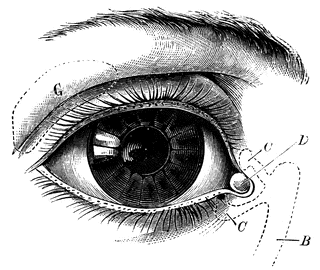
In my eyeI'VE COMMENTED BEFORE on the episode where the Buddha speaks to Bāhiya in a post entitled "In the Seen...". He begins the famous speech with: "in the seen, only the seen; in the heard only the heard...". This is somewhat cryptic, but I noted that I had found another sutta which acts as a commentary on the Bahiya incident: The Māluṅkyaputta Sutta is in the Saṃyutta Nikāya (SN 35.95 PTS: S iv.72).

My translation of part of the text says:
Having seen a form with mindfulness [sati] forgotten,
attending to the delightful appearance;
Experiencing an impassioned mind,
and remaining attached to that;

In him numberless sensations multiply from that form,
Covetousness and worry impair thinking.
Thus suffering is heaped up and nibbāna is said to be remote.
The gist is that without mindfulness, delight in the pleasures of the senses overcomes our minds and our minds are impaired. As a result we heap up suffering and are unlikely to be liberated - we will remain in thrall to pleasure seeking. Those who are mindful, do not delight in the pleasures of the senses, do not heap up suffering, and for them nibbāna is close.

In contemporary Buddhist presentations we usually find the idea that there is something other than the "seen in the seen" attributed to Brahmins. Compare the text above with this passage from the Chāndogya Upaniṣad (CU)
atha yatraitad ākāśam anuviṣaṇṇaṃ cakṣuḥ sa cākṣuṣaḥ puruṣo darśanāya cakṣuḥ | atha yo vededaṃ jighrāṇīti sa ātmā gandhāya ghrāṇam | atha yo vededam abhivyāharāṇīti sa ātmā abhivyāhārāya vāk | atha yo vededaṃ śṛṇvānīti sa ātmā śravaṇāya śrotram || CU 8.12.4 || [1]

Where the eye gazes into space, that is the puruṣa of the eye. The eye is for seeing. The one who experiences "let me smell this" is the ātman. The nose is for smelling. The one who experiences "let me say this" is the ātman. The voice is for talking. The one who experiences "let me hear this" is the ātman. The ear is for hearing.

atha yo vededaṃ manvānīti sa ātmā | mano 'sya daivaṃ cakṣuḥ | sa vā eṣa etena daivena cakṣuṣā manasaitān kāmān paśyan ramate ya ete brahmaloke || CU 8.12.5 ||


The one who experiences "let me think this" is the ātman. Mind is its divine eye. [The ātman] sees the delights and
pleasures of the world of Brahmā, with this divine eye, the mind. [2]
Here CU is proposing that there is something other than the seen in the seen. In the seen we find 'the one who sees', which here is described as both puruṣa 'person' and ātman 'self' - the two are synonymous.[3] It is this ātman which, through the divine eye, sees the pleasures of the world of Brahmā/brahman (the word could mean either the creator god, or the universal essence; a distinction entirely lost in the Buddhist Canon). Elsewhere we find that this self is to be sought within the heart (i.e. through introspective meditation) and having once identified it, it becomes one's whole world (idaṃ sarvaṃ). The analogy I use is that when one falls in love, one's lover becomes one's whole world. We might also think of a meditator absorbed in samādhi, where the samādhi itself becomes their whole world.

Buddhist critiques of this kind of material are probably familiar to Buddhist readers. CU seems to propose that there is an 'entity' behind experience, an experiencing 'person' or 'self' which has the experiences. Discovering this self within oneself is what enables the seer to be liberated. However note that there is a discrepancy. The Brahmin does not aim to see the delights of this world. This is confirmed in many passages throughout CU as well as other Upaniṣads. Ordinary desire and the delights of this world are as much an anathema in the early Upaniṣads as they are in early Buddhist texts. The Brahmin ascetic aims at union with brahman, and thereby escape from saṃsāra. However the Buddhist criticism focusses on paying attention to delights of the senses. Is it because they deny the possibility of anything behind the senses, or have they just missed the point? I think it's not out of the question that the Buddhists simply did not understand the main points of the Upaniṣads and that the beliefs being criticised were not in fact held by Brahmins. Indeed as far as I can see such beliefs are not even attributed to Brahmins in the Pāli texts.

The Buddhist critique of ātman rests on the idea that, as an immanent aspect of brahman, it is substantial, permanent and makes us happy when we find it. Although the idea does not occur in the suttas, compare this description of nibbāna from the canonical Cūḷaniddesa:
Nibbānaṃ niccaṃ dhuvaṃ sassataṃ avipariṇāmadhammanti asaṃhīraṃ asaṃkuppaṃ.
"Nibbāna is permanent, constant, eternal, not subject to change, indomitable, unshakeable." [4]
Such a statement is common enough in Buddhism. How is this different? The essential difference here is that Buddhists assume Brahmins to be speaking literally, and take their own almost identical statements metaphorically. This assumption goes unchallenged amongst Buddhists. Why? I suggest that it is because of deep seated prejudices against, and antipathy towards, Hinduism. Our identity as Buddhists is bound up with rejecting Hinduism - even if only nominally. However I do not believe that the Brahmins were speaking literally. Rather, I'd say they were struggling to put into words their own meditation experiences, and were themselves inventing a new metaphorical language to do so, and rejecting their own 1000 year old traditions in the process. There's no a priori reason to assume unsubtly or stupidity on the part of Brahmins. In fact Brahmanical thinking of this period is scintillating and full of subtlety. A few centuries later the Buddhists of India adopted precisely the same kind of essentialist metaphor for tathāgatagarbha! Buddhists also posit a faculty other than the six senses—with no name I've been able to discover—which can discern nibbāna or "the Unconditioned" [sic] or "things as they really are". How is this different from the 'eye' which sees the brahmaloka? Note that Buddhists also adopted this Brahmanical idea of the brahmaloka, but again they took it literally. Which suggests that they simply did not understand the idea. The Buddhist criticisms of those seeking rebirth in the brahmaloka are wide of the mark, and more or less irrelevant from the point of view of the Upaniṣads. This is not to say that criticism is not possible, only that early Buddhist texts are wholly unconvincing in their criticism.

I am not suggesting that there is no difference in the doctrinal positions of Buddhism and Brahmanism. Clearly there are differences. However Buddhists have long exaggerated and distorted these differences. Modern Buddhists, like their ancient counterparts, seem largely ignorant of the Upaniṣads or the nuances in them. And as I come to better understand them myself, I am becoming increasingly doubtful about the idea that Buddhist doctrine is a reaction against Upaniṣadic Brahmanism: one can hardly react against what one is ignorant of. This raises interesting questions which I hope to address in the future.

For an inspiring and vivid account of the Brahmanical religion I heartily recommend this book:
William K. Mahoney. The Artful Universe: An Introduction to the Vedic Religious Imagination. State University of New York Press.
I must warn traditionalist Buddhists however: this book may cause you to experience sympathy and respect for Brahmins, which could be detrimental to your Buddhist faith.

~~oOo~~

Notes.
  1. Chāndogya Upaniṣad. Sanskrit text from www.sub.uni-goettingen.de.
  2. My translation follows Valerie Roebuck's which is more literal than Patrick Olivelle's.
  3. As an aside I would once again like to point out the mad way we capitalise these words when they are in a religious context. We want to say that 'Self' is somehow different from, more important than, 'self'. Capitalising suggests either something substantial (a thing), or something transcendental (beyond our ability to sense or understand). Sometimes, paradoxically, both . Neither is very helpful. The Sanskrit 'ātman' is ambiguous, and the ambiguity is part of the fun. If we try to make clear a distinction when our source text is (perhaps deliberately) ambiguous we are not doing justice to the text: ātman means 'body, and self, and the immanent aspect of brahman.' And especially in the early Upaniṣads all three meanings are found. If we try to fix it as one or other we lose nuances, and we may in fact obscure the meaning.
  4. The CST version of the Pāli Canon does not include PTS page numbers for this text. It is from the commentary on the Pārāyanānugīti gāthā from the Sutta-niptāta. CST p.201.
Related Posts with Thumbnails